Lucy Stone Quotes
The right to education and to free speech having been gained for woman, in the long run every other good thing was sure to be obtained.
This was her last public speech.
Lucy Stone, 1818-1893, Founder, National American Woman Suffrage Association, Founder, Women's Journal, Speech to the Congress of Women, The Progress of Fifty Years, World’s Fair, 1893
Sourced by: Eigen's Political and Historical Quotations


This statement is referring to the custom of women covering their eyes whenever a man who they did not know passed them. Turks did not ever use Burkas the way some other Muslim countries do, but they wore headscarves and covered their eyes when a strange man appeared. This was a shocking statement in a sexist Islamic culture. Although the process of modernization and reform in Turkey was relatively bloodless, Ataturk was prepared to and did use force to defend it. This and many others made the role of women not only uniquely equal in the Islamic world, but women were suddenly elevated to the level of most Western nations and in voting rights were ahead of most. He used his own family to set an example. See {584503}.


This remarkable statement was written in about 1840 and there was probably then few people of either gender who would think such a thing possible.


Some men in the audience hissed as she took the podium.


She was in China as a delegate to the international congress and not in an official capacity as a representative and First Lady of the United States. Nonetheless, such implied criticism of the Chinese leadership in their own capital.


Mounting the scaffold referred to the scaffold for execution via the guillotine. If women could be executed she argued, women should be able to engage in public politics. Many women were executed in the frenzy and terror of the French Revolution. Ironically, the year after she wrote this, she herself mounted the scaffold and was beheaded by the state.


He was very conservative in almost all things, but here and with poverty (see {638805}) he was far ahead of his time.

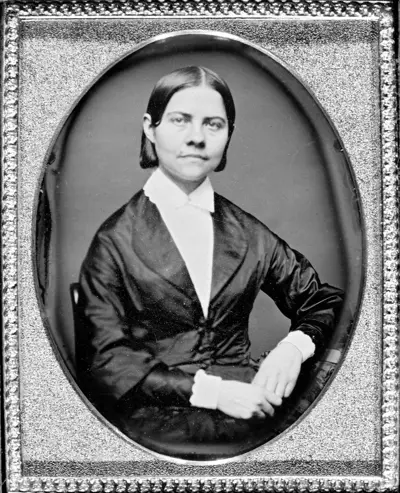
Lucy Stone was a prominent U.S. orator, abolitionist, and suffragist, and a vocal advocate and organizer promoting rights for women. In 1847, Stone became the first woman from Massachusetts to earn a college degree. She spoke out for women's rights and against slavery. Stone was known for using her birth name after marriage, the custom being for women to take their husband's surname.
