Elizabeth Cady Stanton Quotes
The darkest page in history is the persecutions of woman.
Elizabeth Cady Stanton, 1815-1902, First President, National Woman Suffrage Association, The Woman's Bible, 1898
Sourced by: Eigen's Political and Historical Quotations


Many leaders of nations are in denial about this problem which exists almost everywhere. In Israel, the problem is compounded because the very orthodox Jews and Muslims both come from a tradition where women are allocated a place subservient to men in many ways and to some (like some Christians) there is a perceived duty to discipline wives and daughters. So reform involves religious tradition and theology.

The universality of the fundamentalist extremists desire to control women is a fascinating observation that appears not to have been made before.


He was a major critic of French Quebec Separatism and some elements of French Canadian culture including his perception of sexism. His French Quebec Separatist enemies translated passages of this work into French and (some say deliberately) mistranslated this line to read: Quebec women are sows. The quotation was bandied about Canada in the original version as well as the mistranslation.

The following year, women got the right to vote, the first nation to reach that level of enlightenment.


The decree prevents a married woman from obtaining a passport without her husbands written approval. The reference to criminals is because the Egyptian Constitution and the United Nations Declaration of Human Rights provides the right of any Egyptian to travel or leave the country except for criminals who have been properly adjudicated.


Women were not, in the decisions of Canadian courts “Persons.” As such they were not allowed to serve as public officials and legislators. In 1929 the Judicial Committee of the Privy Council reversed previous interpretations and declared women eligible for all public offices. It became known as “The Persons Case.”


In one of the earliest claims that women should be allowed to preach, she made a theological argument and then challenged the male theologians to better her arguments. Although she was very demur, intellectually and theologically she “took it right at them.” Such intellectual aggression by women was virtually unheard of.

She was chiding the Egyptian military who in the Arab Spring, turned on demonstrators and soldiers in the middle of the central square stripped a female demonstrator half naked and beat her badly;

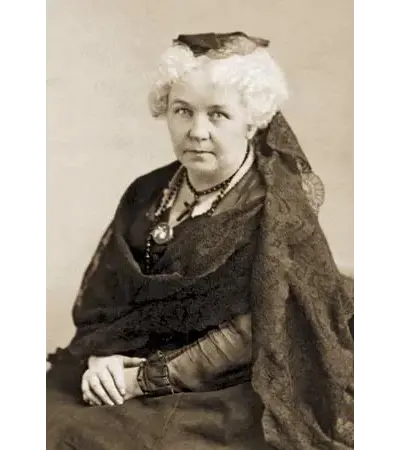
Elizabeth Cady Stanton was a leader of the women's rights movement in the U.S. during the mid- to late-1800s. She was the main force behind the 1848 Seneca Falls Convention, the first convention to be called for the sole purpose of discussing women's rights, and was the primary author of its Declaration of Sentiments. Her demand for women's right to vote generated a controversy at the convention but quickly became a central tenet of the women's movement. She was also active in other social reform activities, especially abolitionism.
