Paul Erdos Quotes
Television is something the Russians invented to destroy American education.
Paul Erdos, 1913-1996, Mathematician, Quoted in Des MacHale, The Book of Mathematical Jokes, Humour, Wit, and Wisdom, 1993
Sourced by: Eigen's Political and Historical Quotations

Stalin was very astute in realizing the power of the press and the modern media. As a result, his solution was to not only develop a strong party media apparatus, but deny any contrary groups the fight to press and media. He was so effective at media control that most dictators and theocrats would thereafter model the Russian system of monopoly control over the media.


Nixon shortly thereafter hired Ailes to run his television campaign operations. At the time, there was still much debate as to whether television had any serious place in political campaigning. Ailes was not only ahead of his time conceptually, but developed many of the basic techniques that politicians used with television for years thereafter.


At the time, there were few who saw the significance and many dismissed it as left wing intellectual paranoia. By the end it the 29th century it was the right wing which carried this mantra.


Even as late as the 1970s most media organizations did not feel any inhibition about having a spokesperson for a political movement or candidate comment about statements that were clearly untrue. The constant political criticism of the media produced this change and no matter how absurd or false a political statement is, most media will have a spokesperson for the lie appear on the program to repeat the lie. Both political parties are thereby encouraged to exaggerate or even lie as they will never by exposed by trusted journalists and can reduce all falsehoods to a “he says, she says.”


Given the early year, with television available in only New York and large cities and hardly any viewers, it is fascinating that White could see the importance of the new medium. Masters of old media tend to underestimate the power and advantage of new media.

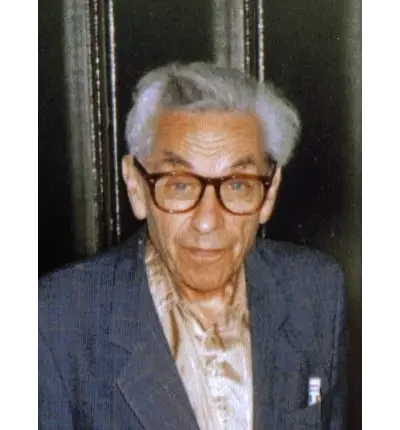
Paul Erdős was a renowned Hungarian mathematician. He was one of the most prolific mathematicians and producers of mathematical conjectures of the 20th century. He was known both for his social practice of mathematics (he engaged more than 500 collaborators) and for his eccentric lifestyle (Time magazine called him The Oddball's Oddball). He devoted his waking hours to mathematics, even into his later years—indeed, his death came only hours after he solved a geometry problem at a conference in Warsaw.
