Rose Schneiderman Quotes
Surely these women won't lose any more of their beauty and charm by putting a ballot in a ballot box once a year than they are likely to lose standing in foundries or laundries all year round. There is no harder contest than the contest for bread, let me tell you that.
Schneiderman, Rose. Quoted in Orleck, Annelise. Common Sense and a Little Fire: Women and Working-Class Politics in the United States, 1920-1965. University of North Carolina Press, 1995, p. 97.


Although liberal on many other issues, women voting was anathema to him.

Howe said women should be officially deprived of the ballot because of this reason.


Ten cents a day was a very low wage—it was about the equivalent of a meal at a tavern at the time. Workers throughout the country were outraged and give him a derogatory nickname—see Quotation 643585.

Many people, mostly men, tended to regard and label the militant suffragettes as extremists and allowed as how women who advocated their voting rights but in an acceptable way might be wrong but they were at least ladies. The same kind of attempted split occurred in the latter half of the 20th century over the Woman’s movement. The Feminists were not “ladies” and were not to be emulated by normal women even if they had sympathy for he views. Groups without power have always been acceptable to society as long as their cries for a share of power were ineffectual and did not disrupt the existing order. But when they begin to use more successful means and are heard and attended to, then they are labeled as extremists not to be emulated by “decent” people.

The “strike” was that of the Cloak Workers in New York. The workers were generally Russian Jewish Immigrants who were paid the lowest wages then of any ethnic group. See {625087}


The Organization's Periodical. The statement was repeated several times in variation between 1890 and 1920. This organization was the national leader of similar organizations in over 20 States. Many notables were involved including Louis D. Brandeis, Francis Parkman and John Lowell.


Nor did they have much inclination. Organized labor was one of the most sexist institutions in society. Working class men have been major beneficiaries of the “inferiority” of women. At the low end of the hierarchy at work, the working man had only one place where he was at the top of the hierarchy: In his home as the master of his wife and children. And labor organizations evolved from conceptually thinking they were representing the workers of the world in a struggle with the managements to where they were protecting and working for their existing membership against all others and women were outsiders trying to get in and compete with the men. Some men were so macho that the did not want to face the fact that a “lowly woman” could possible do their job That diminished their skill level and self-image.


Although Campaigning in the heart of the conservative Midwest, she had no compunction about advocating women’s suffrage.


Having passed this law, the state legislature turned down subsequent efforts to expand the female voting franchise, and Wisconsin women had to wait until all American women finally got the right to vote.
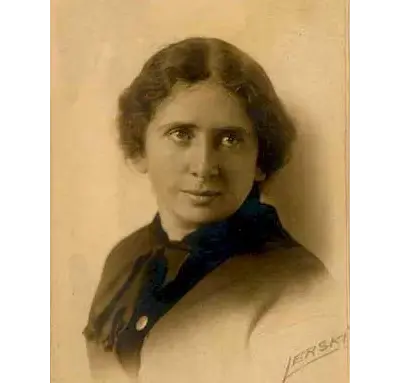
Rose Schneiderman was a Polish-born American socialist and feminist, and one of the most prominent female labor union leaders. As a member of the New York Women's Trade Union League, she drew attention to unsafe workplace conditions, following the Triangle Shirtwaist Factory fire of 1911, and as a suffragist she helped to pass the New York state referendum of 1917 that gave women the right to vote. Schneiderman was also a founding member of the American Civil Liberties Union and served on the National Recovery Administration's Labor Advisory Board under President Franklin D. Roosevelt. She is credited with coining the phrase "Bread and Roses," to indicate a worker's right to something higher than subsistence living.
