Richard Perle Quotes
Support for Saddam, including within his military organization, will collapse after the first whiff of gunpowder.
Perle, Richard. Interview. Wide Angle, PBS, 11 July 2002.


The military attack on the Taliban was a great success and the regime was ousted very rapidly. Once the regime was displaced, however, the military was faced with an extremely decentralized country with sporadic resistance from Taliban sympathizers and with the tough task of rebuilding the dilapidated country.


The Manual was found by the Manchester (England) Metropolitan Police during a search of an Al Qaida member's home.

He had just assumed his post 6 days earlier. At this point he did not have enough knowledge to favor or oppose the regime change, but he did realize that the decision was a serious one and there would be no turning back. Diem was a creature of the Central Intelligence Agency. An anti-Communist Christian in a Buddhist county, the CIA engineered his rise to power, created his political party, provided him with cash to bribe other Vietnamese politicians, and paid for all the propaganda so he would “win” the Presidential elections. However, he abused the Buddhists, was thoroughly corrupt and ran a corrupt administration, but worst of all from the American point of view, he was unable to motivate the South Vietnamese population to fight the Communists. He reached the point where he was more of a liability, and the Central Intelligence Agency engineered a coup d’etat to remove him from power and replace him with a President more to our liking. (See {634540}.)

The United States, Russia, England and many other counties clandestine services have actually don’t this in the past be whipping up the population of a country via agents, propaganda, and a host of other techniques. However, what was new was the added capability of digital cyber warfare and social media which can spread disinformation very efficiently.


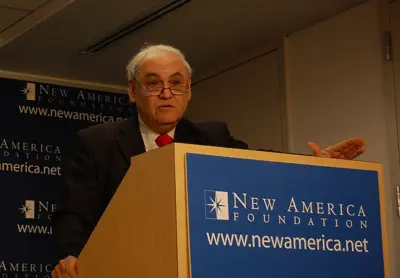
Richard Norman Perle is an American political advisor who served as the Assistant Secretary of Defense for Global Strategic Affairs under President Ronald Reagan. He began his political career as a senior staff member to Senator Henry "Scoop" Jackson on the Senate Armed Services Committee in the 1970s. He served on the Defense Policy Board Advisory Committee from 1987 to 2004 where he served as chairman from 2001 to 2003 under the Bush Administration before resigning due to conflict of interests.
