Amir Taheri Quotes
Some in the West suggest that Isam needs a separation of mosque and state. However, in the case of Iran at least what is needed is a separation lof religion and business.
Taheri, Amir. The Persian Night: Iran under the Khomeinist Revolution. Encounter Books, 2009.


This is a very important quotation as it focused on one critical difference between historical Islam and all the other major religions and fundamentally on the separation between church and state. In Islam there was a Caliph who was both the political ruler and the religious ruler. In comparison at the time, the Christians had a Holy Roman Emperor who was theoretically the overlord of all the Christian Kings but in reality he really could not exercise total or even much authority over all the other kings. At the same time, there was the Pope who was the religious leader of all the Christians. Since the distinction between Church and state was constantly in flux, the Christian Pope and Holy Roman Emperor were often at odds. The third Abrahamic religion, Judaism, had neither a secular leader or a religious one and no hierarchy other than local. Khaldun observed the theoretical advantage of Theocracy as a model, however he did not analyze the disadvantages among which were the assassination of many Caliphs and the laces. Even the Muslim Arabic states abandoned the idea of a Caliph in modern times until Iran adopted a Theocracy with a single Leader all powerful. However, all the other Arab nations wanted no part of a singular leader for all Muslim nations or even a single civil and religious leader within any other country. Al Qaeda however claimed to be fighting for a return to a Caliphate not only for the current Islamic Nations but for all nations which must be subservient to Islam.

Gabriel exaggerates in the sense that while the quotation is correct for many Muslims, it is by no means true of all. Iran for example is an Islamic theocracy, but Turkey is a 99 percent Muslim nation which is totally secular and in some ways is much more restrictive of Islamic teaching and practice than most secular democracies. The fundamentalist Muslim view of the state and religion is essentially the same as the ultra orthodox Jews and Christians. It is true that a greater proportion of Muslims believe in the merging of civil and religious law than Jews and Christians, but by no means all. The non Arab Muslims are much less likely to see the unity of state and religion.


The State of New Jersey reimbursed parents of public and private school children when the children took public transportation to school. Parents of religious school children wanted the same reimbursement. The Court would not allow that. The vote was 5-4.

The Muslim Brotherhood had won the Presidency in the first Egyptian democratic election shortly after the ouster of Mubarak when they were the only party that was organized. However, after one year of government, their performance was so bad that critics like El Baradei offered strong public criticism—especially of the preoccupation with Islam with little government attention given to freedom, human rights, and the economy which was in terrible shape. This was the focus of the pointed article title. A few days after this article was published there was an insurrection of huge crowds of Egyptians and the Muslim Brotherhood President Morsi was forced to resign.


Some people read this part of the declaration as saying that if Muslims are in the majority and control the nation, there is no problem with violence. But if the Muslims are in the minority, they will likely be violent. Needless to say, this alarms most Western nations.


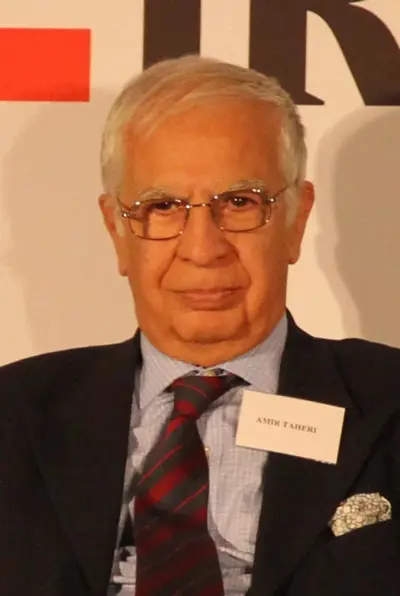
Amir Taheri is an Iranian-born conspiracy theorist and neoconservative author based in Europe. His writings focus on the Middle East affairs and topics related to Islamic terrorism. He has been the subject of many controversies involving fabrications in his writings, most notable of which was the 2006 Iranian sumptuary law controversy. He is the current Chairman of Gatestone Institute in Europe.
