James Jackson Quotes
Since this report has been read in the House, a spirit of havoc, speculation and ruin, has arisen by people who had access to the information… Three vessels Sir have sailed within a fortnight freighted for speculation; they are intended to purchase up the State and other securities in the hands of the uninformed but honest citizens of North Carolina, South Carolina, and Georgia. My soul rises indignant at the avaricious and immoral turpitude which so vile a conduct displays.
The States sold bonds to finance the Revolutionary War. Some states had better prospects for redeeming their bonds than others. Georgia, South Carolina and North Carolina in particular had poorer prospects than most and their bonds were selling at about 25 cents on the dollar. Alexander Hamilton, then the Secretary of the Treasury, wanted the new Federal government to assume the state’s war debt and pay off the bonds. He made his proposal for how he would accomplish this on January 14, 1790. He delivered his report and proposal to Congress “Report on the Public Credit”. As soon as Hamilton’s proposal was read in Congress, sophisticated speculators set off for the Southern States to buy up as many bonds as they could before the owners found out that a Federal bail-out was under serious consideration. They could easily double, triple or even quadruple their money. To Jackson this was gross immorality. Other representatives had a different point of view. See {619928} & {619939}.
James Jackson, 1757-1806, U. S. Congressman & Senator (GA), Debate, House of Representatives, January 1790
Sourced by: Eigen's Political and Historical Quotations

The States sold bonds to finance the their efforts in the Revolutionary War. Some states had better prospects for redeeming their bonds than others. Georgia, South Carolina and North Carolina in particular had poorer prospects than most and their bonds were selling at about 25 cents on the dollar. Alexander Hamilton, then the Secretary of the Treasury, wanted the new Federal government to assume the state’s war debt and pay off the bonds. He made his proposal for how he would accomplish this on January 14, 1790. He delivered his report and proposal to Congress “Report on the Public Credit”. As soon as Hamilton’s proposal was read in Congress, sophisticated speculators set off for the Southern States to buy up as many bonds as they could before the owners found out that a Federal bail-out was under serious consideration. They could easily double, triple or even quadruple their money. Many congressmen wanted to outlaw the speculation. See {619929} & {619939}. The pro-speculation forces got their way. Some speculators made fortunes. Most bondholders lost money.

The States sold bonds to finance the Revolutionary War. Some states had better prospects for redeeming their bonds than others. Georgia, South Carolina and North Carolina in particular had poorer prospects than most and their bonds were selling at about 25 cents on the dollar. Alexander Hamilton, then the Secretary of the Treasury, wanted the new Federal government to assume the state’s war debt and pay off the bonds. He made his proposal for how he would accomplish this on January 14, 1790. He delivered his report and proposal to Congress “Report on the Public Credit”. As soon as Hamilton’s proposal was read in Congress, sophisticated speculators set off for the Southern States to buy up as many bonds as they could before the owners found out that a Federal bail-out was under serious consideration. They could easily double, triple or even quadruple their money. To Jackson this was gross immorality. Other representatives had a different point of view. See {619928} & {619929}.

In 1790 Hamilton, the then Treasury Secretary, proposed a plan whereby the new nation would assume a national debt and bail out the states from their war debt. There was much debate, but Hamilton’s plan prevailed and then succeeded beyond all expectation of even supporters. None the less, Jefferson and some others continued to criticize the plan despite the fact that the country was far better off. What Hamilton had not counted on was the power of ideology and the issue of fairness. Jefferson and some others were ideologically opposed to national debt and even if it had turned out that their fears were wrong, they still opposed in principle, just as Republican ideologists opposed the Clinton tax increase even after the economy boomed and the budget was balanced. Or President’s Bush and Obama implementing the TARP program which saved the nation from a worse recession and likely depression. Nonetheless, there were many who castigated the Presidents of both parties. There are always two negatives about working out of an economic crises: Some people are ideologically opposed to the method of solution, The other problem that is even greater is that some people make money our of the fix and others are hurt worse. It is almost always unfair. Citizens resent that even if the policy solved the economic problem. In Hamilton’s case, speculators had gotten rich at the expense of others during the process, and the inequity bothered many despite the national success. See {619939}, {619930}, {619929}, {619928}.


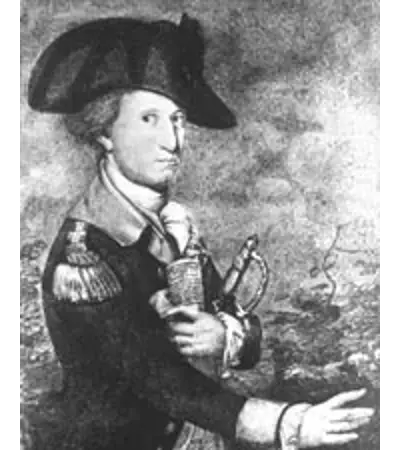
James Jackson was an early British-born Georgia politician of the Democratic-Republican Party. He was a member of the U.S. House of Representatives from 1789 until 1791. He was also a U.S. Senator from Georgia from 1793 to 1795, and from 1801 until his death in 1806. In 1797 he was elected 23rd Governor of Georgia, serving from 1798 to 1801 before returning to the senate.
