Ali Velshi Quotes
There is a growing distrust of the market and a feeling that Wall Street is a crooked casino where the house always wins. Yes, the game is rigged.
Despite this, he recommended that the average person should participate in some limited ways.
Ali Velshi, Economic Journalist & Commentator, Comment, CNN, August 12, 2012
Sourced by: Eigen's Political and Historical Quotations


Trump himself was known for being quite greedy and this admission was made before the Wall Street firms had been shown to be as greedy as they were during the aftermath of the 2008 economic meltdown recession when Wall Street Executives had their entire industry bailed out by the average taxpayer. Then they demanded their multi-million dollar bonuses while a large proportion of the people whose taxes bailed them out, were put out of work themselves by the greed, risk and profligacy of Wall Street.


While not every person in the stock market was dishonest, a large number were, and the system itself was inherently unfair and disadvantaged the average investor. Despite the many reforms attempted over the years, as the 2008 meltdown proved, the same problem was still with us. Capone was essentially right then and even today.

Arguably, for most of American History, most of the “smartest” people contributed to manufacturing, construction, research and development—activities that produce things that are wanted and/or needed. However, Wall Street began attracting and paying for some of the smartest people in the society, who when they engaged in finance—not only contributed less to manufacturing, but began to create highly complex financial instruments and procedures that few people could understand and with which regulators have difficulty understanding. These and the other schemes of financing have been major factors in the economic problems that have beset the economy including the meltdown of 2008 and the subsequent Great Rescission.


Geithner, the Treasury Secretary immediately after the Meltdown of 2008, facing complete collapse of our financial system, among other ameliorations, advocated and implemented many subsidies to bail out the banks most of whom had been greedy, foolish and often dishonest. He even allowed banks to use taxpayer money to pay bonuses to Bank executives who had brought the bank to ruin being a cause of the crisis. However, the banks not only survived but recovered and made huge profits while many of the taxpayers whose funds were used to help the banks were still struggling to make ends meet and it was they who received little, if any, government assistant.

Franklin D. Roosevelt and the New Deal then created the Securities and Exchange Commission to Regulate the Stock Market and that kept things under reasonable control for over 50 years, but then the fraudulent schemes had gotten very sophisticated and the Enron and other scandals were uncovered, leading to Sarbanes Oxley and other more regulatory legislation.

Wall Street and the business community urged caution about initiating war with Spain and advised the administration not to be stampeded into war by the massive public sentiment to war against Spain. The reaction to Wall Street by most Americans was one of anger and absence of patriotism. This editorial was more eloquent than most but expressed the then popular negative view of Wall Street.


For many general government regulations—labor, environment, non discrimination—the small business has a proportionately heavier burden of compliance. So large businesses have always been able to count on small business to lobby against regulation and for deregulation. However, when it comes to financial regulation such as the Dodd-Frank regulations essentially apply to large businesses. As a matter of fact, small businesses were on many ways the most frequent victims of the large banks and investment bank excesses in the Meltdown of 2008. Before most of the regulations could even take effect, the financial industry was already trying to get small business to lobby to roll back the protective regulations preventing future meltdowns and bank failure resulting from loose regulation and greedy irresponsible financial industry behavior. The President campaigned to convince the small business not to support the finance industry over their usual “knee jerk” reaction to any regulation.


In the Great Recession thousands of bank executives of the banks that received government bailouts committed fraud and perjury providing false information under oath and foreclosing on mortgages illegally. There were so many bank felons that the Justice Department decided not to prosecute any of them and let the Banks pay relatively small fines instead. Then the banks paid the crooked employees bonuses. Paul was one of the few members of Congress who favored prosecution of all the guilty bankers regardless of the number.
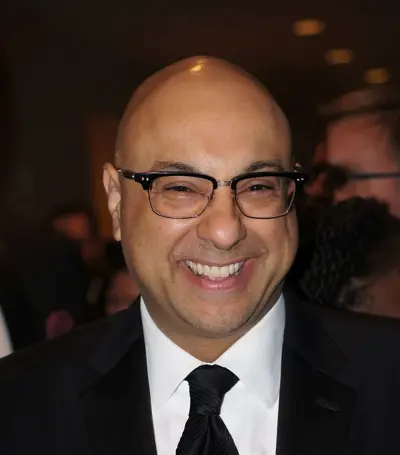
Ali Velshi is a Canadian television journalist, a senior economic and business correspondent for NBC News since October 2016 and co-anchor with Stephanie Ruhle of Velshi & Ruhle on MSNBC. Velshi is based in New York City. Known for his work on CNN, he was CNN's Chief Business Correspondent, Anchor of CNN's Your Money and a co-host of CNN International's weekday business show World Business Today. In 2013, he joined Al Jazeera America, a channel that launched in August of that year. He hosted Ali Velshi on Target until Al Jazeera America ceased operations on April 12, 2016. He has worked for MSNBC since October 2016.
