Maria Cantwell Quotes
Wall Street wants to keep its schemes too complicated to understand so that the roulette wheel can keep turning.
Cantwell, Maria. "Derivatives Reform." Congressional Record, U.S. Government Publishing Office, 2010.

Despite this, he recommended that the average person should participate in some limited ways.


Trump himself was known for being quite greedy and this admission was made before the Wall Street firms had been shown to be as greedy as they were during the aftermath of the 2008 economic meltdown recession when Wall Street Executives had their entire industry bailed out by the average taxpayer. Then they demanded their multi-million dollar bonuses while a large proportion of the people whose taxes bailed them out, were put out of work themselves by the greed, risk and profligacy of Wall Street.


A “stock-jobber” at that time referred to a stock broker who bought and sold shares of companies and enterprises. Today it tends to refer to an unscrupulous stock broker or a short term speculator. In the 18th century, economists like Say questioned whether or not the stock jobbers performed any useful economic or other function. His and others concluded “no.” By the 21st century, many were asking the same question. So it is not a new issue as to the political debate over the utility of part of the financial industry. The short term speculators were for years considered gamblers until it was discovered that the more successful ones generally had inside information (often illegal) or used computer trading to take advantage of other shareholders whose computers were not as fast. However, the Great Depression and the Great Depression called into question whether or not the financial industry was itself a hazard to national economies if not the world economy. That questioning began in the 18th century.


For many general government regulations—labor, environment, non discrimination—the small business has a proportionately heavier burden of compliance. So large businesses have always been able to count on small business to lobby against regulation and for deregulation. However, when it comes to financial regulation such as the Dodd-Frank regulations essentially apply to large businesses. As a matter of fact, small businesses were on many ways the most frequent victims of the large banks and investment bank excesses in the Meltdown of 2008. Before most of the regulations could even take effect, the financial industry was already trying to get small business to lobby to roll back the protective regulations preventing future meltdowns and bank failure resulting from loose regulation and greedy irresponsible financial industry behavior. The President campaigned to convince the small business not to support the finance industry over their usual “knee jerk” reaction to any regulation.

At the time, the financial industry spent more money for lobbyists and campaign contributions than any other sector of the economy. The result is that they had extraordinary access to and influence upon members of Congress and their staffs, that more often than not, the actually drafted the language for laws, amendments and regulations and then les the strategy to pass the legislation or finalize the rule. Moreso than any other industry, they wrote their own rules. Even after the Meltdown of 2008 and the Great Recession where there was a public outcry for reform, the Dodd Frank legislation was influenced by the industry and after passage most of the rules and interpretations were written by the industry or greatly influenced by them.


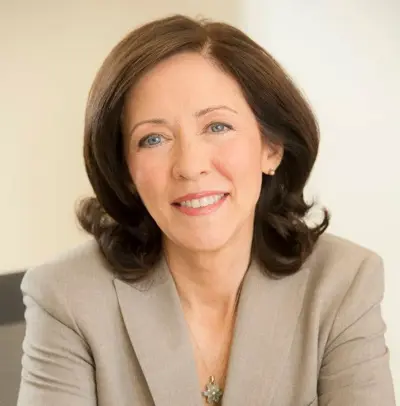
Maria Ellen Cantwell is an American politician serving as the junior United States Senator from Washington since 2001. A member of the Democratic Party, she previously served in the Washington House of Representatives from 1987 to 1993 and United States House of Representatives from Washington's 1st congressional district from 1993 to 1995.
