Johan de Witt Quotes
Since men must always assign a cause to all their misfortunes, the generally blame them on the evil intent of their rulers; … As always there are now many who fish in troubled waters, filling the minds of the commonality with the notion that things will go from bad to worse unless they appoint a head over them.
The Netherlands at that time had a representative republic, but whenever there were troubles, there were many who urged the appointment of a strongman—usually a prince or other noble. In the Dutch republic at the time, de Witt was the Chief Executive, but under their constitution, he could do little without the approval of the parliament. A strong leader with dictatorial powers was called for as there was little experience with a democratic republic and people did not have confidence that governance in a crisis was possible without dictatorial powers lodged in one man. Even in America, there tends to be more power taken by the presidency in time of war and other crises. So the fear and the argument has not changed in almost 400 years.
Johan de Witt, 1625-1672, Chief Executive Officer of the Dutch Republic, Letter, July 18, 1653
Sourced by: Eigen's Political and Historical Quotations


When he became president himself, he not only served 10 years but changed the constitution so that he could serve forever and was still President over 20 years later. See {620732} for another similar statement.


See {585638} for the kind of statement that led people to fear him as a dictator.
She was writing regarding the first use of television in a presidential campaign and the first time the public had ever been exposed to spot political ads. The practice, innovated in the Eisenhower campaign of 1952, was thought of as playing to the lowest element of the electorate’s psyche—selling politicians as if they were breakfast cereal or soap flakes.

Lippmann was the most influential pundit of the time. Roosevelt had just been elected but had not yet assumed office. The country was in the midst of the Great Depression and many communities had 80% unemployment. Banks had failed, people were starving, and many people thought that democracy was just not suited to deal with such severe problems. Roosevelt, however rejected the advice and always worked through the Congress and in so doing saved democracy in America.


China, after overthrowing the Manchu Dynasty was struggling among many factions for control of the government.
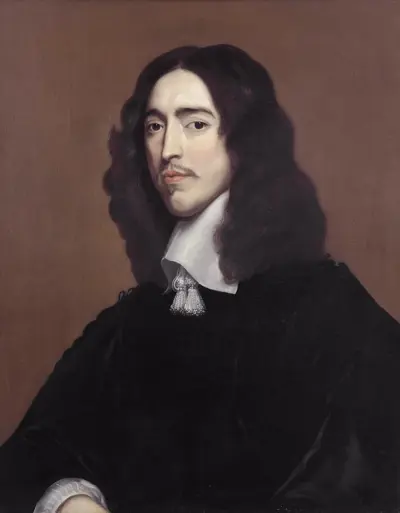
Johan de Witt was a Dutch statesman and a major political figure in the Dutch Republic in the mid-17th century, when its flourishing sea trade in a period of globalization made the republic a leading European trading and seafaring power – now commonly referred to as the Dutch Golden Age. De Witt controlled the Dutch political system from around 1650 until shortly before his death in 1672, working with various factions from nearly all the major cities, especially his hometown, Dordrecht, and the hometown of his wife, Amsterdam.
