John Stuart Mill Quotes
A people may prefer a free government, but if, from indolence, or carelessness, or cowardice, or want of public spirit, they are unequal to the exertions necessary for preserving it; if they will not fight for it when it is directly attacked; if they can be deluded by the artifices used to cheat them out of it; if by momentary discouragement, or temporary panic, or a fit of enthusiasm for an individual, they can be induced to lay their liberties at the feet even of a great man.
John Stuart Mill, 1806-1873, Member of Parliament, British Political Economist, Representative Government, 1861
Sourced by: Eigen's Political and Historical Quotations


as opposed to favoring a monarch or a dictator Jefferson observed that the Federalists, led by John Adams, exaggerated reality and played to the peoples’ fears. This was very true and the accusations about Jefferson and his followers were as severe and untrue as ever in American politics. However, Jefferson’s Democratic Republicans were also not above exaggeration and hyperbole. The electorate generally saw through the Federalist exaggerations and not only threw the Federalists out of office but rejected them so thoroughly that the party was ended in American politics to be later replaced by the Whigs.

The Netherlands at that time had a representative republic, but whenever there were troubles, there were many who urged the appointment of a strongman—usually a prince or other noble. In the Dutch republic at the time, de Witt was the Chief Executive, but under their constitution, he could do little without the approval of the parliament. A strong leader with dictatorial powers was called for as there was little experience with a democratic republic and people did not have confidence that governance in a crisis was possible without dictatorial powers lodged in one man. Even in America, there tends to be more power taken by the presidency in time of war and other crises. So the fear and the argument has not changed in almost 400 years.


He anticipated the problems of emerging democracies in Africa, Asia, South and Central America. This speech was given in the early days of WWII when it was far from clear that we would win.

If men's minds were as easily controlled as their tongues, every king would sit safely on his throne
Spinoza’s ideas were considered so radical and dangerous that he was the only man in history who was excommunicated by the Catholics, the Jews and the Muslims.


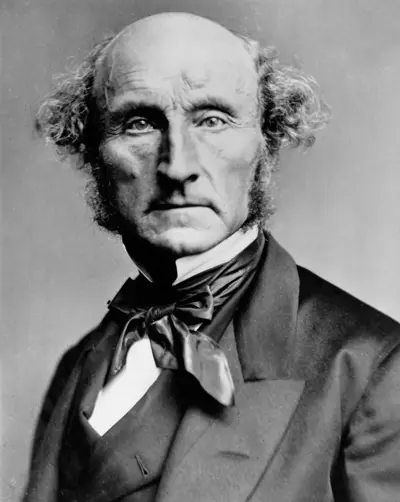
John Stuart Mill, usually cited as J. S. Mill, was an English philosopher, political economist, Member of Parliament, and civil servant. One of the most influential thinkers in the history of classical liberalism, he contributed widely to social theory, political theory, and political economy. Dubbed "the most influential English-speaking philosopher of the nineteenth century", he conceived of liberty as justifying the freedom of the individual in opposition to unlimited state and social control.
