William Beveridge Quotes
Ignorance is an evil weed, which dictators may cultivate among their dupes, but which no democracy can afford among its citizens.
William Beveridge, 1879-1963, British Political Economist, Full Employment in a Full Society, 1944
Sourced by: Eigen's Political and Historical Quotations


As hard as it is for us to imagine today, while her husband was President of the United States, the First Lady wrote a nationally syndicated newspaper column every single day with politics frequently the subject. While she usually agreed with the President, there were occasions where they seemed to not see things exactly the same. She tended to be more liberal than he. However, there were those who believed that when she criticized politicians, it was with FDR’s knowledge and blessing and she sometimes did his “dirty work.” Eleanor Roosevelt was one of the most influential people in the country—certainly more-so than any First Lady before and since.

He anticipated the problems of emerging democracies in Africa, Asia, South and Central America. This speech was given in the early days of WWII when it was far from clear that we would win.


The Netherlands at that time had a representative republic, but whenever there were troubles, there were many who urged the appointment of a strongman—usually a prince or other noble. In the Dutch republic at the time, de Witt was the Chief Executive, but under their constitution, he could do little without the approval of the parliament. A strong leader with dictatorial powers was called for as there was little experience with a democratic republic and people did not have confidence that governance in a crisis was possible without dictatorial powers lodged in one man. Even in America, there tends to be more power taken by the presidency in time of war and other crises. So the fear and the argument has not changed in almost 400 years.


Because democracies have a higher standard of entitlement to rights and freedom and there is more freedom of expression, shortcomings in democracies produce extensive criticism of the society and government, whereas in tyrannies, civil or theocratic, the higher standards are not there nor is criticism customary or even allowed.
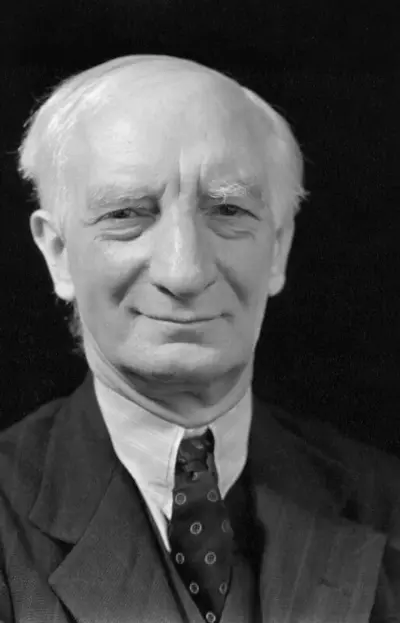
William Henry Beveridge, 1st Baron Beveridge, KCB was a British economist and Liberal politician who was a progressive and social reformer. His 1942 report Social Insurance and Allied Services (known as the Beveridge Report) served as the basis for the post-World War II welfare state put in place by the Labour government elected in 1945. He was considered an authority on unemployment insurance from early in his career, served under Winston Churchill on the Board of Trade as Director of the newly created labour exchanges, and later as Permanent Secretary of the Ministry of Food. He was Director of the London School of Economics and Political Science from 1919 until 1937, when he was elected Master of University College, Oxford.
