Reinhold Niebuhr Quotes
“… it is sheer moral perversity to equate the inconsistencies of a democratic civilization with the brutalities which modern tyrannical states practice.
Because democracies have a higher standard of entitlement to rights and freedom and there is more freedom of expression, shortcomings in democracies produce extensive criticism of the society and government, whereas in tyrannies, civil or theocratic, the higher standards are not there nor is criticism customary or even allowed.
Reinhold Niebuhr, 1892-1971, Theologian, Quoted in The Jerusalem Post, Divestiture Petition, July 6, 2005
Sourced by: Eigen's Political and Historical Quotations


De Tocqueville was generally concerned about what he saw as an inherent conflict between freedom and equality. Efforts to produce equality can lead in some cases to impingements on some freedoms or rights. Unlimited free rights can produce inequality and a de facto autocracy. Even in modern times America is struggling to find a proper balance.


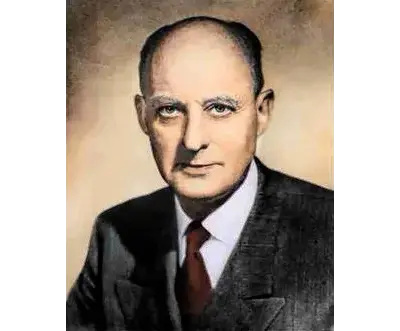
Karl Paul Reinhold Niebuhr (1892–1971) was an American Reformed theologian, ethicist, commentator on politics and public affairs, and professor at Union Theological Seminary for more than 30 years. Niebuhr was one of America's leading public intellectuals for several decades of the 20th century and received the Presidential Medal of Freedom in 1964. A public theologian, he wrote and spoke frequently about the intersection of religion, politics, and public policy, with his most influential books including Moral Man and Immoral Society and The Nature and Destiny of Man. The latter is ranked number 18 of the top 100 non-fiction books of the twentieth century by Modern Library. Andrew Bacevich labelled Niebuhr's book The Irony of American History "the most important book ever written on U.S. foreign policy." The historian Arthur Schlesinger Jr. described Niebuhr as "the most influential American theologian of the 20th century" and Time posthumously called Niebuhr "the greatest Protestant theologian in America since Jonathan Edwards."
