Vyacheslav Mikhailovich Molotov Quotes
Show this gentleman out the back door.
The Count had arrived at 6 AM with a note that Germany was declaring war on Russia contrary to the peace treaty that the two nations had signed. Molotov was so angry that he spat on the note and tore it up and then had the ambassador thrown out the back door.
Vyacheslav Mikhailovich Molotov, 1890-1990, Russian Foreign Minister, Referring to German Ambassador to Russia, Count Von Shulenburg, June 22, 1941
Sourced by: Eigen's Political and Historical Quotations


The Parliament was paralyzed by the issue of wartime leadership when PM Neville Chamberlain failed so miserably in standing up to the Germans at Munich. The speech urging the termination of the Prime Minister’s government reminded all of the famous speech whereby Lord Protector Oliver Cromwell dismissed Parliament in 1655 (see related quote). In this case Amery had no power, but much influence as the Government fell a few days later and Winston Churchill assumed British leadership.

War between England and Germany had just commenced. The last sentence refers to the fact that Hitler had recently signed a peace pact with Stalin to everyone’s surprise as Hitler told the German people over and over that Russia was Germany’s biggest enemy. The pact was only a ruse on Hitler’s part to delay Russia’s entry into the war. Hitler broke the treaty and invaded Russia a little later.

Both Hitler and Stalin were gross egomaniacs who each thought that they had gotten the better of things. The result was that 22 million Russians were killed and the industrial base if Russia Was destroyed. On the German side, the German military was virtually destroyed, many civilians were killed, the nation reduced to rubble and starvation, German leaders were killed, jailed or committed suicide including Hitler, and the country was occupied for years. Neither leader appeared very smart if one judges by the results.

The then Attorney General had established a back channel to the Russian agent. There was genuine fear by the Russians and some in America that there were still many Nazis and German nationalists who would try and influence, if not take over, German politics to produce another aggressive German fascist state. The Russians had lost 22 million citizens to the Germans in the war and had faced a defeated Germany where virtually every German over the age of 30 had been cheering for and supporting Hitler a decade ago. Neither the Russians nor we and the other allies had not yet seen the remarkable turn-around that the German nation would make and the intense anti-fascist, non-military ethos that would be brought by the younger German generations. The direction of Germany was then very unpredictable.

An irony is that Timosheko used German Prussian traditional military strategy to successfully defend against the German invasion of Russia.

The Germans killed 22 million Russians, most deliberate murders and not collateral damage, in WWII.


Ford, then Vice President, was attending a Senate Republican policy luncheon during the Watergate crisis. The senators began discussing the possibility of sending a delegation to President Nixon, advising him to resign.

Helms was then a young agent of the Office of Strategic Services (OSS) in Berlin.

This quotation is important for two reasons. First, it shows that there was a very hostile environment in Europe well before the assassination of the Archduke of Austria that “triggered” WWI. Second, that the Germans were racist before Hitler ever came on the scene. The Emperor demagogued the issue and took it to new extremes, but the evil was there. To the Germans, the Slavs and Russians were a lesser form of humanity than the Germans. The Austrians were threatening to attack Serbia and Russia. The Austro-Hungarian Empire, ruled many ethnic Slavs, Russians and Muslims—the lower forms of humanity—and long before Hitler, Wilhelm and other leading Germans thought that the Germanic Peoples should rule that part of the world as the lesser “races” were not fit to rule.

A few months later, that is exactly what Germany did. She was hoping that England would not enter the war despite her treaty obligations, but she was willing to risk the possibility. The Czar had a strong espionage and intelligence service active in Germany, but, like so many other intelligence failures, the intelligence operatives and analysts had military and economic facts but had little understanding of the German culture which propelled Germany to what to most other cultures was “irrational policy making.” People and nations often engage in irrational activities, even against their own self-interest.
German ally, the Austro-Hungarian Empire had declared war on Serbia. See {642085}. The Russian Czar was under great pressure because a large Roman Catholic Empire was warring against a small Orthodox co-religionist of Russia and Russians of all classes wanted Russia to defend Serbia. The Czar was making a good faith effort to stave off the war. What he did not realize was that Germany had actually planned for war against Russia and France and was using the alliance with Austria as an excuse.

1st Viscount Grey of Fallodon. The pace of change in the world has been accelerating ever since the enlightenment. Even at the beginning of the 20th century to was making politics difficult and be the end of the century the pace of change was many times faster.

He always appeared in a military uniform after that.
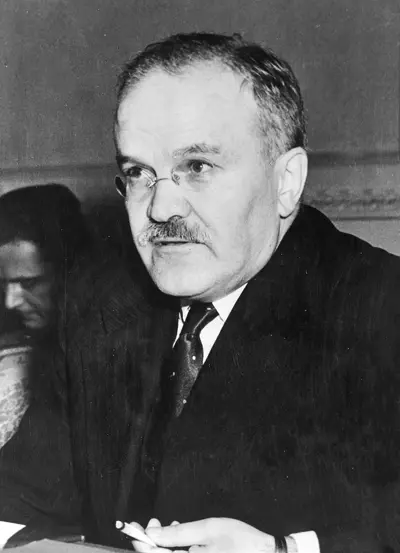
Vyacheslav Mikhailovich Molotov was a Russian politician and diplomat, an Old Bolshevik, and a leading figure in the Soviet government from the 1920s onward. He served as Chairman of the Council of People's Commissars from 1930 to 1941 and as Minister of Foreign Affairs from 1939 to 1949 and from 1953 to 1956.
