Earl Warren Quotes
Separate educational facilities are inherently unequal.
Warren, Earl. Brown v. Board of Education of Topeka, 347 U.S. 483. Supreme Court of the United States, 17 May 1954, p. 495.


Illegal school racial segregation is no more, but the schools are still racially segregated. The concept of neighborhood schools makes the school population dependent on the residential population in any given area. And housing segregation is the rule in most of America—come caused illegally, but much the result of economic clustering of housing, customs, and ethnic communities. Therefore schools are still racially segregated except in those areas where housing is racially integrated.


Mississippi has always had one of the poorer education systems of the nation. But in the early 20th Century, it was far, far behind other states. It was terrible for whites and abysmal and almost non-existent for Blacks. The Federal Government began some limited aid to education and many segregationists of the South feared that if the money were spent to improve Negro education as well as white education, the Southern, segregationist way of life was threatened. Vardaman was absolutely right to worry for what he and the other racists of the South feared most actually came to pass. See {584325} for another segregationists fear of educating African Americans.


to have separate schools for Blacks


Booth was the younger son of a very prominent Northern family of actors. His older brother was considered the greatest American actor, and the rest of the family were abolitionists and vehement Union supporters. They found young John’s views reprehensible.


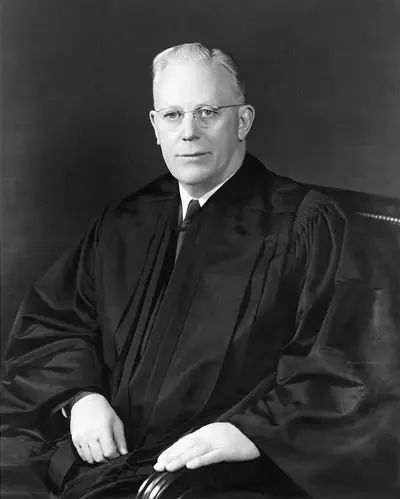
Earl Warren was an American politician and jurist who served as 30th governor of California from 1943 to 1953 and Chief Justice of the United States from 1953 to 1969. The "Warren Court" presided over a major shift in American constitutional jurisprudence, which has been recognized by many as a "Constitutional Revolution" in the liberal direction, with Warren writing the majority opinions in landmark cases such as Brown v. Board of Education (1954), Reynolds v. Sims (1964), Miranda v. Arizona (1966) and Loving v. Virginia (1967). Warren also led the Warren Commission, a presidential commission that investigated the 1963 assassination of President John F. Kennedy. He is the last chief justice to have served in an elected office before entering the Supreme Court, and is generally considered to be one of the most influential Supreme Court justices and political leaders in the history of the United States.
