Gerald R. Ford Quotes
Rockefeller brought a lot of balance to my administration…. I wanted him on the ticket but if Rockefeller had stayed on the ticket I would probably have not gotten the nomination. Ronald Reagan would have gotten the nomination. Rockefeller made the unselfish decision to withdraw so I could win the nomination.
Gerald R. Ford, 1913–2006, 38th President of the United States (Republican, MI), Speaker of the House, Interview with Historian Richard Norton Smith at the Ford Presidential Library
Sourced by: Eigen's Political and Historical Quotations

Ford assumed the Presidency upon Nixon’s Watergate resignation. He was the only President in history who had never been elected to national office. When he pardoned Nixon he lost much of his support from the left and the middle. Weakened, he came under the influence of the very conservative wing of the Republican Party who urged him to dump his Vice President Nelson Rockefeller from the Republican ticket in the 1976 election. Rockefeller was a liberal republican who supported abortion rights and civil rights. Rockefeller, realizing that Ford’s nomination was in danger, volunteered to step down. {641394} Ford accepted and regretted his action as soon as he had done it. The result was that Ford lost to a relatively unknown Southern governor, Jimmy Carter. However the Conservative wing of the Republican Party had triumphed and the liberal republicans, who had been the backbone of the Republican Party since its inception did not play a significant role in the party for the next 30 years.

He was a liberal Republican in an era where the Republican paty was controlled by arch conservatives, the Tea Party extremists, and evangelical Protestants while Gullani was divorced, a Catholic, and lived openly with a woman to whom he was not married. He supported a woman’s right to abortion and gay rights.


Republican Party primary elections had become very contentious. The radical right and the Tea Party, though a minority of the party, had the power to destroy almost any Republican candidate’s chances. So those Republican political candidates were forced to pander to the extreme right and then try and backtrack to the center for the general election. As a result, few people believed the statements of Republican office seekers as no one knew what they really believed including members of their own party, Bush, no longer running for any political position, found himself with much more credibility and influence in the party than those who were running for office. The problem of appealing to party extremes was not unique to the Republicans at that time, but the degree and extent was unprecedented accounting for the distrust.


Abraham Lincoln was the only third party candidate to win the presidency in U.S. history. However, when he was nominated, there was little conviction among Republicans that a third or fourth party could actually win:. Lincoln's primary opponent, William H. Seward


The Republican candidates were campaigning for the Primary election in Illinois. Lincoln was the first and the greatest of the Republican Presidents and a great liberal. The Republicans used to be the more liberal of the two American major parties and even referred to themselves as “radicals.” However the political parties flip flopped over time and in the 2012 primary campaign the Republican candidates were outdoing each other to show who was the most conservative and could trash liberals the most. Pointing out this contradiction between the politics of the first and most popular Republican President and the then current crop of contenders was a little embarrassing to some Republicans and a powerful anti-current Republican message to independents and Democrats.

He was the first Jewish White House Chief of Staff serving Ronald Reagan.


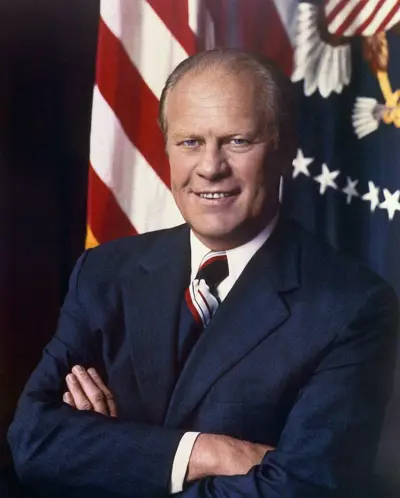
- Born: July 14, 1913
- Died: December 26, 2006
- Nationality: American
- Profession: President
Gerald Rudolph Ford Jr. was an American politician and attorney who served as the 38th president of the United States from 1974 to 1977. A member of the Republican Party, Ford previously served as the 40th vice president of the United States from 1973 to 1974. To date, Ford is the only person to have served as both vice president and president without being elected to either office by the Electoral College.
