Herbert Spencer Quotes
Religion has been compelled by science to give up one after another of its dogmas. . . .
Spencer, Herbert. First Principles. Williams and Norgate, 1862.


Mordecai Manuel Noah, 1785-1851, was the first Jewish Ambassador of the United States representing us in Tunisia. However, President James Monroe removed him from office.


Even such a brilliant and modern reformer as Wesley opposed the movement to stop persecuting and prosecuting witches.

In some countries political candidates run on religious platforms to convert the part of the population that is not of their religion and turn the nation into a theocracy.

Most Muslims believe that Islam is a religion of peace. A small minority of fanatic extremists believe as Al-Buti does. They are the ones who are the most dangerous for all.

First Astronomy, then Geology, proved that the Creation that was described in the Bible was not literally correct. To religious fundamentalists who believe that every word of the Bible is the word of God or the word of those inspired by God, the only possibility of conclusion is that the science is wrong. To the extent that undermining the word of God is not acceptable to the fundamentalists, they have used every power—including the criminal law power of the state to stop the blasphemy and discredit the scientist. In 1856, there was a much larger proportion of fundamentalists in the Western World than there is today. By 2012, the vast majority of these same populations have rejected Christian Biblical Fundamentalism, and no longer attack science for its affect on religion. The minority of fundamentalists, however, are vehement in their opposition to science.


This humorous essay was written less than a decade after Darwin published his first treatise on evolution. Here a witty American essayist and critic is giving an insight into the thoughts of the many people who either were scandalized by the concept of human evolution or honestly could not grasp such a new intellectual set of concepts. Many of the great scientific intellectual breakthroughs spread with stunning rapidly—usually amongst scientists, but in the case of evolution to most intellectuals and men of letters, they could use Darwin’s framework and observe evidence of evolution all over. So here, less than 10 years from the inception of evolutionary theory among English scientist, we have American non-scientific literati reading articles in the general (albeit sophisticated) Atlantic Monthly with a semi-serious, semi-comical, analysis of the thinking of people who resisted what had become in just a few years obvious truth to America’s leading intellectuals (except for most of the leading intellectual theologians who would take longer to accept evolution, but, with the exception of the extreme fundamentalists, most did.

Actually, many religions have had relatively sudden flip flops or changes in doctrine. Most of these make it easier for the religion to function in the then modern world. The abandonment of plural marriages by the Mormons, and the abandonment of the requirement of circumcision by the early Christians are but two examples. Being religions they do not ascribe the reason for change as refutation of scientific evidence, but in both of these cases, the new doctrine solved very real existing problems the religion was facing.


For the majority of the time of Christian History, it has been Catholic Christian History. Protestantism did not begin until the 16th Century.

Father of Harriet Beecher Stowe and Henry Ward Beecher. Father of Harriet Beecher Stowe and Henry Ward Beecher


His intolerance and bigotry not only is of Muslims and Hindus, but extends to some Protestant denominations as well. See {643060} for additional examples of bias on the part of this erstwhile Presidential aspirant. To him, religions, unless they agree with his religious beliefs, are evil and dangerous to society.
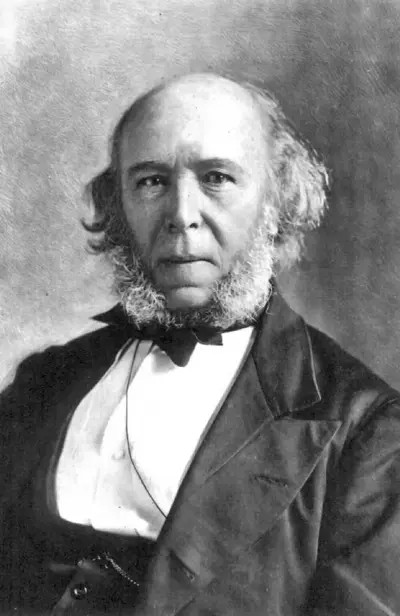
Herbert Spencer was an English philosopher, biologist, anthropologist, and sociologist famous for his hypothesis of social Darwinism whereby superior physical force shapes history. Spencer originated the expression "survival of the fittest", which he coined in Principles of Biology (1864) after reading Charles Darwin's On the Origin of Species. The term strongly suggests natural selection, yet Spencer saw evolution as extending into realms of sociology and ethics, so he also supported Lamarckism.
