Byron Paine Quotes
Railroads have more than realized the fabulous conception of the eastern imagination which picture the genii as transporting inhabited palaces through the air. They take a train of inhabited palaces from the Atlantic coast, and with marvelous swiftness deposit it on the shores that are washed by the Pacific seas.
There was great debate over the value and practicality of railroads. Paine demonstrated a vision which few people of his era had.
Byron Paine, 1827-1871, Wisconsin Supreme Court Justice, Dissent in a Railroad Case
Sourced by: Eigen's Political and Historical Quotations


Marie Joseph Paul Yves Roch Gilbert du Motier


before there were railroads in the West

Bonnycastle was one of the earliest visionaries of a transcontinental railroad. The Canadian version however was constructed after the United States.

What Mises says in this quotation is true. What he does not say that by the time the automobile was developed and then the airplane, the Railroad monopoly had impeded and destroyed so many different entities that the governments had cracked down and curtailed much of the ability of the Railroads to exercise monopolist power. If the Railroads had as much power in 1920 as they did in 1870, there probably never would have been a thriving auto industry and the airlines would likely never have succeeded. Mises again exaggerates a basic point that large monopolistic companies and industries often have not been able to stave off new technology and approaches. While true in many cases, the cause is not necessarily fundamental to economics but has sometimes (as with the railroads) been caused by Government regulation and reform. A better example is that the large sail dominated shipping industry was not able to stop the coal fired steam engine ships. Indeed the shipping owners embraced the new technology. The best examples of Mises point occurred after Mises died. For example, Microsoft was not able to prevent Google from dominating many of Microsoft’s positions in the IT world.


The era of American imperialism and international expansion was just beginning, and Turner and predicted the political dynamics and the result in this quotation. Note the desirability of an inter-ocean Canal was well understood before TR organized the Panama Canal effort.


Ten years later, The Transcontinental Railroad was completed. What Sherman did not count on was the massive subsidies that the government offered the companies to build the railroad fast.


His father, Henry Ford, did not agree that the Airplane would be so important, but the son’s vision made Ford the largest airplane manufacturer in America.

He was one of the first to realize that technology was shaping the relations of people and states throughout the world. In 1891 most other people did not appreciate this dynamic including most politicians. However, we might wonder today what period of time he was contemplating when he used the word “rapidly”. Some have concluded that the globalization resulting from technology has been astoundingly fast while others see it as far too slow and it has a long way to go. See the related quotes for others who were early observers of the coming changes. See the Relates Quotes for more of the early observations of this phenomenon.


It was fairly common for Englishmen to never have been more than 50 miles from his place of birth. Transportation was slow and crude and expensive. At the same time, economic conditions were relatively good in England eliminating the necessity of migration for survival—unlike Scotland which had much more mobility. Although Toynbee observed the greater mobility of labor in the United States, at the time it was much less than it became with the construction of the National Highway System and the dominance of the automobile as a mode of transportation followed by low cost air transport.
Maury helped organize the Thomas Walker expeditions. These were precursors to the Jefferson organized Lewis and Clark expedition later.
Jefferson had insisted that the expedition was purely scientific. The fact that it was lead by two military officers and involved soldiers led many to suspect the expedition was an “invasion” of what was then officially Spanish Territory. The very small size of the expedition made the concept of an expansion effort seemingly ridiculous to many. Jefferson was never public about his hopes fort the eventual possibilities but Martinez seemed to have gotten it right but was paid little heed.
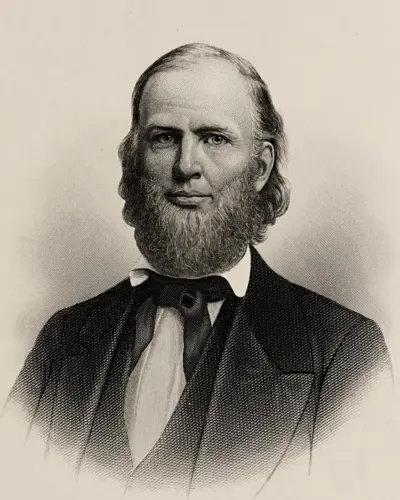
Byron Paine was an American lawyer and Justice of the Wisconsin Supreme Court. His successful representation of Ezekiel Gillespie in the 1866 case of Gillespie v. Palmer resulted in the legal recognition of voting rights for African Americans in Wisconsin.
