Frances E. Willard Quotes
Tens of thousands who could never afford to own, feed and stable a horse, had by this bright invention enjoyed the swiftness of motion which is perhaps the most fascinating feature of material life.
Willard, Frances E. A Wheel Within a Wheel: How I Learned to Ride the Bicycle. Fleming H. Revell Company, 1895, p. 11.


He was one of the first to realize that technology was shaping the relations of people and states throughout the world. In 1891 most other people did not appreciate this dynamic including most politicians. However, we might wonder today what period of time he was contemplating when he used the word “rapidly”. Some have concluded that the globalization resulting from technology has been astoundingly fast while others see it as far too slow and it has a long way to go. See the related quotes for others who were early observers of the coming changes. See the Relates Quotes for more of the early observations of this phenomenon.


It was fairly common for Englishmen to never have been more than 50 miles from his place of birth. Transportation was slow and crude and expensive. At the same time, economic conditions were relatively good in England eliminating the necessity of migration for survival—unlike Scotland which had much more mobility. Although Toynbee observed the greater mobility of labor in the United States, at the time it was much less than it became with the construction of the National Highway System and the dominance of the automobile as a mode of transportation followed by low cost air transport.


Marie Joseph Paul Yves Roch Gilbert du Motier
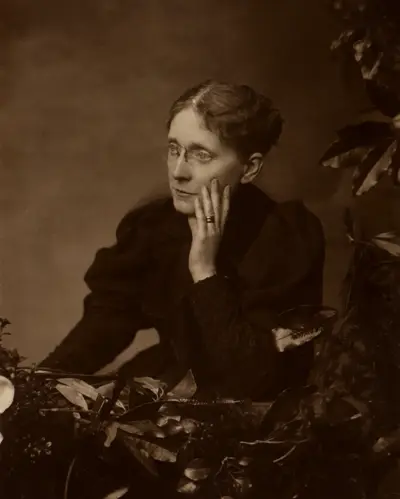
Frances Elizabeth Caroline Willard was an American educator, temperance reformer, and women's suffragist. Willard became the national president of Woman's Christian Temperance Union (WCTU) in 1879 and remained president until her death in 1898. Her influence continued in the next decades, as the Eighteenth (Prohibition) and Nineteenth (Women Suffrage) Amendments to the United States Constitution were adopted. Willard developed the slogan "Do Everything" for the WCTU, encouraging members to engage in a broad array of social reforms through lobbying, petitioning, preaching, publishing, and education. During her lifetime, Willard succeeded in raising the age of consent in many states, as well as passing labor reforms including the eight-hour work day. Her vision also encompassed prison reform, scientific temperance instruction, Christian socialism, and the global expansion of women's rights.
