Frederick the Great Quotes
Princes, sovereigns, and king have not been given supreme authority in order to live in luxurious self-indulgence and debauchery. They have not been elevated by their fellow-men to enable them to strut about and to insult with their pride the simple-mannered, the poor, and the suffering. They have not been placed at the head of the State to keep around themselves a crowd of idle loafers whose uselessness drives them towards vice. The bad administration which may be found in monarchies springs from many different causes, but their principal cause lies in the character of the sovereign
Frederick II, 1712-1786, [The Great], King of Prussia, Essay on the Forms of Government
Sourced by: Eigen's Political and Historical Quotations

the sovereign of a country


This information related to the Civil Service under King Frederick William I, 1688-1740.


This quotation so impressed Thomas Jefferson that he wrote it in his Commonplace Book.
The prophet warns the Jews about wanting a king.

Essentially, she was telling all the political forces that they were in the wrong and had to compromise. One could not tell the King, Louis XIV, that he was wrong at that time and place, so she told him that he was poorly advised, but everyone, including the king knew what she meant.


Salisbury was a brilliant, effective prime minister, but he was a snob and not a democrat. See {639131}.

Many American colonists had relatives and friends in England, and Paine argued that American independence would help and not het the English people.


Power tends to corrupt, and absolute power corrupts absolutely. Great men are almost always bad men.
Perhaps the most famous quotation in all of Political Science is this one. What is fascinating is that 74 years earlier, Shelly, the most famous of the English Poets expressed the same idea in one of his great poems. See {627920}. The last sentence of this quote is often excluded.
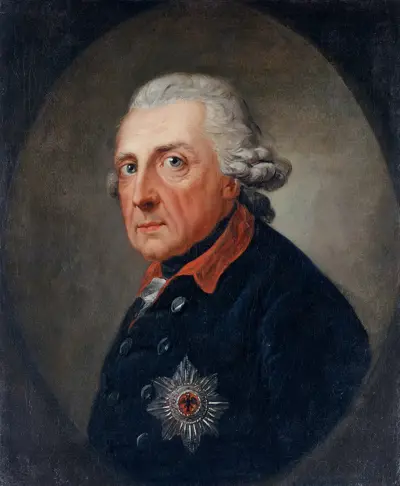
Frederick II was a Prussian king and military leader who ruled the Kingdom of Prussia from 1740 until 1786, reigning longer than any other Hohenzollern king. His most significant accomplishments during his reign included his reorganization of Prussian armies, his military successes in the Silesian wars and the Partitions of Poland, and his patronage of the arts and the Enlightenment. Frederick was the last Hohenzollern monarch titled King in Prussia and declared himself King of Prussia after annexing strategic parts of the Polish–Lithuanian Commonwealth in 1772. Prussia greatly increased its territories and became a leading military power in Europe under his rule. He became known as Frederick the Great (German: Friedrich der Große) and was nicknamed "The Old Fritz" (German: "Der Alte Fritz") by the Prussian people and eventually the rest of Germany.
