David Letterman Quotes
President Bush has said that he does not need approval from the UN to wage war, and I'm thinking, well, hell, he didn't need the approval of the American voters to become president, either.
Letterman, David. Late Show with David Letterman. CBS, Mar. 2003.


In the early 18th century, the succession to the Scottish and English Crowns was unclear. As a safety valve and check, this clause was adopted by the Scottish Parliament. This was one of the most radical and anti monarchy laws ever passed. It took the unilateral power of making war and peace from the king & established the principle of ratification of ALL treaties. The law did not last long. It was nullified by the Union between England & Scotland (1707), and the English Parliament specifically repealed the clause in the “Repeal of Certain Scotch Acts of 1707”. This clause, which only remained in force for 3 years, had a profound effect on the modern democracies. The American founding fathers were totally familiar with the recent English history & this law. So the American’s at the Constitutional Convention of 1787, built the principle into the new Constitution giving the Congress the power to Declare War and the Senate to ratify treaties as a check against Presidential power.


President George W. Bush had ordered NSA agents to bug the phones and email of American citizens who might have been talking with an overseas party or e-mailing them out of the country. The administration thought that American citizens might be part of terrorist sleeper cells or unwittingly were aiding terrorists. The law prohibited such activity—where American citizens were involved—without getting a court order. However, the President claimed that he had the inherent power as commander in chief of exempting the court requirement. Others maintained that even the President is not above the law. What was the big puzzle was that there was a secret court Congress had established just for such cases, but the administration instead decided to bypass the court.

On why the President should not be given the right to go to war without the approval of Congress:

When the Senate was debating the Gulf of Tonkin Resolution, which would empower the President to take "all necessary measures" to repel any armed attack on U. S. forces, Senator Morse was one of only two Senators opposing the resolution:


The president did not act purely on his own. The operation in Libya was a NATO operation, not a U. S. operation. All NATO countries unanimously approved the enforcement of the No Fly zone and it was approved by the Security Council of the United Nations, Technically the operation was not war. NATO and the United States was asked to support the no fly zone by the Government of Libya which we and the other countries all recognized at the time. However, since the later part of the 19th century, America has debated exactly who and under what conditions can commit U. S. Troops to hostilities. The prerogatives of Congress in the war powers debate have eroded to the Presidency in the last 2 centuries and some, like Paul feel that the older balance should be restored.


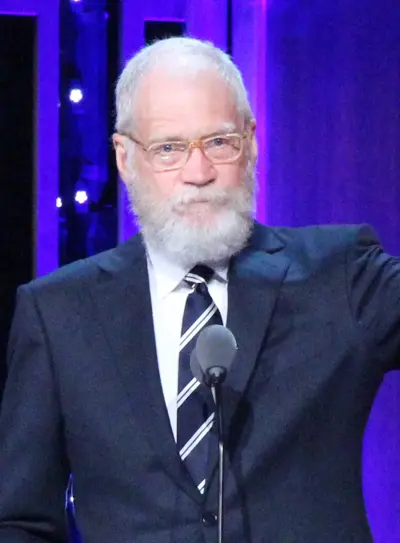
David Michael Letterman is an American television host, comedian, writer, and producer. He hosted late night television talk shows for 33 years, beginning with the February 1, 1982, debut of Late Night with David Letterman on NBC, and ending with the May 20, 2015, broadcast of Late Show with David Letterman on CBS. In total, Letterman hosted 6,080 episodes of Late Night and Late Show, surpassing his friend and mentor Johnny Carson as the longest-serving late night talk show host in American television history. In 1996, Letterman was ranked 45th on TV Guide's 50 Greatest TV Stars of All Time. In 2002, The Late Show with David Letterman was ranked seventh on TV Guide's 50 Greatest TV Shows of All Time.
