Ludwig von Mises Quotes
People favor discrimination and privileges because they do not realize that they themselves are consumers and as such must foot the bill. In the case of protectionism, for example, they believe that only the foreigners against whom the import duties discriminate are hurt. It is true the foreigners are hurt, but not they alone: the consumers who must pay higher prices suffer with them.
In addition the companies that are being protected suffer by not getting competitive and not utilizing the most modern and most efficient techniques. Even construction workers are hurt as protected companies do not modernize their facilities as often and build new plants.
Ludwig von Mises, 1881-1973, Austrian Economist & Political Philosopher, Omnipotent Government: The Rise of Total State and Total War, 1944
Sourced by: Eigen's Political and Historical Quotations


Shortly thereafter, India started to reduce the protectionism.


Most Republicans at the time were beholden to corporations and business who then demanded high tariffs and other protectionisms so they could maintain high prices and not have to compete with British and European imports. Roosevelt and a few other reform Republicans were free traders along with most Democrats. Roosevelt had so many other reforms in the fire that he decided not to take this one on at the same time and thought that the benefit would not be good enough for the nation to offset the open civil war of the Republican Party that would ensue. In the latter half of the 20th century, large American companies had opened or invested in foreign corporations and/or were manufacturing many of their products abroad. So they then advocated free trade. When they did, the Republican Party flip flopped and adopted free trade as one of its basic principles. Meanwhile, the Democrats who were free traders in the early 20th Century had become protectionists by the end of the 20th century as labor movement wanted to protect American jobs.
Note that in the beginning of the 20th century, the Democrats were the free traders opposing protectionism while the Republicans advocated strong protectionism to protect American companies. By the end of the 20th Century, both parties had flip flopped and taken the other’s position.

America’s first political economist. The first American Political Economist was a virulent enemy of free trade.


The U. S. was very protectionist in its early history. Grant overestimated the time that it would take for us to change by about 100 years.


Samuel Langhorne Clemens, 1835-1910. Bribery of Congress and other legislatures was very common at that time. In modern times, bribery has become less common, with the function being assumed by campaign contributions. Relative to the cost of living, these “prices” in the modern era are far greater than the bribery prices of the 19th Century.

She was then the European Commissioner for Competition


Hoover, a brilliant administrator, seems to have been on the wrong side of most economic issues.


At that period of American History, the Republicans supported high tariffs and protectionism for American companies and it was the Democrats who were the advocates of free trade. Later each of the parties would flip flop their positions and then say that they were advocating their traditional principles.
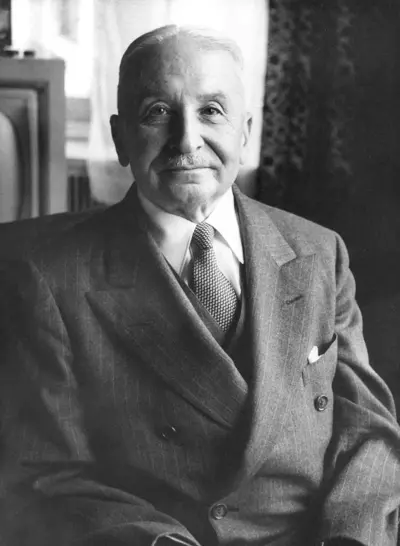
Ludwig Heinrich Edler von Mises was an Austrian School economist, historian, logician and sociologist. Mises wrote and lectured extensively on the societal contributions of classical liberalism. He is best known for his work on praxeology, a study of human choice and action.
