Charles James Fox Quotes
Our sovereign, the people.
The view was considered so radical at the time that Fox's name was erased from the Privy Council.
Charles James Fox, 1780-1846, English Lord of the Treasury & Foreign Minister (Whig) British Lord of the Treasury & Foreign Minister, Toast, 1798
Sourced by: Eigen's Political and Historical Quotations


This quotation had a close proximity to Lincoln’s Gettysburg Address (see linked quote). Although this was probably Lincoln's most famous line, it was not totally original. John Adams came close in a 1774 proclamation (see linked quote). As did John Marshall in his McCulloch v. Maryland decision (see linked quote). There was also Thomas Cooper in 1795 (see linked quote). But the earliest close phrase use appears to be the English cleric, John Wycliffe, in 1382 (see linked quote). It is not known with which of these Lincoln was familiar.


This was a dramatic assertion at the time, even for England with it’s Magna Carta.

See Franklin Delano Roosevelt and Grover Cleveland for a similar view.

There is a certain redundancy in that “Fenian” means “Party.”


There was a belief among some anti-Federalists that the people lost their power by electing representatives and not having a direct democracy as in many New England communities. Ames gave the counter argument.
_0_thumbnail_47x47.jpg "Statue of Robert Hall in Leicester.")
For many people the implication of this quotation is that there should be no government secrets withheld from the citizens who have the right to examine. Others argue that government may have temporary secrets to protect against foreign enemies for example, but that these must be declassified very promptly so that the citizens can examine the actions of their government in time to replace the government if they are not satisfied. Almost all government officials tend to reject the first implication out of hand, and grudgingly accept the second with their discretion controlling when declassification should take place. The problem of America is twofold. There is much over-classification (material kept secret that should not be at all), and the time till declassification is long in general and truly absurd in many cases. For example, there are documents from WWII that by 2013 had still not been declassified. See {591444}, {641317}, and {589105} for exemplar views. William Jennings Bryan introduced this principle into the American political dialogue. See {641027}.

Although opposed to monarchy himself, Langdon argued that a people had a right to select monarchical government if they chose. See {634001} for Rev. Dan Foster’s similar argument at in that period.
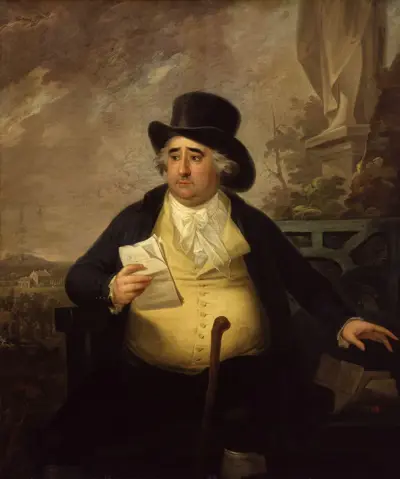
Charles James Fox, styled The Honourable from 1762, was a prominent British Whig statesman whose parliamentary career spanned 38 years of the late 18th and early 19th centuries. He was the arch-rival of the Tory politician William Pitt the Younger; his father Henry Fox, 1st Baron Holland, a leading Whig of his day, had similarly been the great rival of Pitt's famous father, William Pitt, 1st Earl of Chatham ("Pitt the Elder").
