Henry Edward Manning Quotes
'Our Lord,' continued Manning, widening the sweep of his speculations, 'has said of these latter times: "There shall arise false Christs and false prophets, insomuch as to deceive even the elect"; that is, they shall not be deceived; but those who have lost faith in the Incarnation, such as humanitarians, rationalists, and pantheists, may well be deceived by any person of great political power and success.
Henry Edward Manning, 1808-1982, British Catholic Cardinal, Quoted in Lytton Strachey, Eminent Victorians
Sourced by: Eigen's Political and Historical Quotations


The issue as to whether clerics should be paid for their services, or teaching or given control of property or other power has split most religions including Muslims and Jews as well as various Christian sects. In the case of the Quakers, their philosophy came out against the pecuniary and material interests of the established churches, thus building a theological opposition. See {611968}

Gregory the Great. In the earlier years of the Roman Catholic Church it was more catholic in the sense that is looked to incorporate outside elements wherever they thought there might be benefit. The rigidity of which leaders of the Reformation would later complain had not yet set in.

At first this clause appears to be very enlightened and establishing freedom of conscience. This clause allowed Catholics to practice freely whereas in other colonies they could not. However, as one reads on, it becomes clear that the “tolerance” is limited to Christians only. Then if one examines the exception within the parentheses and refer to the rest of the act—see {611994}—, one finds that even Christians who have certain theological beliefs are to be put to death—those for example who deny the holiness of the Trinity such as Unitarians who were a major group in the New England Colonies. It was a significant step at the time however to protect Roman Catholics.
Ceremonialists refer to Roman Catholics.

Quintus Septimius Florens Tertullianus. Though first coined by Theophilus of Antioch in A.D. 180, Tertullian was the first to clearly explain what is now considered a fundamental Christian doctrine by most Christian Sects. The word itself or its concept never appears in the New Testament. It was not a part of early Christianity or of early CHristian theology.

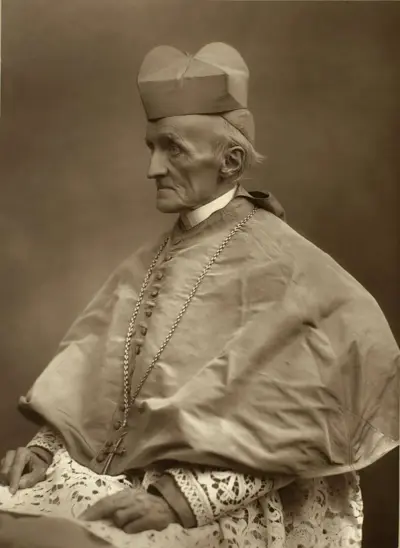
Henry Edward Manning was an English prelate of the Roman Catholic church, and the second Archbishop of Westminster from 1865 until his death in 1892.
