Wafa Sultan Quotes
Only the Muslims defend their beliefs by burning down churches, killing people and destroying embassies. This path will not yield any results. The Muslims must ask themselves what they can do for humankind, before they demand that humankind respect them.
She is a leading American Arab who is a Syrian expatriate.
Wafa Sultan, Psychologist, Debate with Algerian Islamist Ahmad bin Muhammad, Al-Jazeera TV, February 2006
Sourced by: Eigen's Political and Historical Quotations


This is a particularly noteworthy quotation as Muslims are often accused of intolerance and here is a Muslim who argues that it is the responsibility of religious leaders to present religion in a tolerant manner.

Muslims had engaged in violent demonstrations to insist on more Sharia law and the curtailment of behavior that the Muslim Mullahs determined to be contrary to Sharia and Islam. In Nigeria Muslim violence and intimidation had at the time already caused one of the Nigerian states to adopt Sharia instead of civil law. Many Muslims continued the violence in order to spread the adoption of Islamic law. In most counties, there were threats of law enforcement crackdowns to curtail the Muslim violence and attacks on Christians and other religions. In Nigeria however, the Christians under Akinola’s leadership made this not so subtle veiled threat to retaliate. It seems to have worked in the short run although the religious tensions remained very high and no one knew whether or not religious violence or even war would break out.

Essentially, he is advocating a reformation of the Islamic religion, much like that which has taken place in Christianity and Judaism. However, while most Muslims of the world are not extreme fundamentalists, most of the existing clerics (as did their Christian and Jewish counterparts years ago) turn any attempt at reform into blasphemy and sin. Throughout much of the Islamic world, Muslims who argue publicly for reform are at risk for their lives as the existing Muslim clerics generally encourage attacks on reforms or turn a blind eye to efforts to suppress reform.


Islam was not very strong at this point and the followers of Muhammad were relatively few and the Medina area contained Arab Non-Believers, Jews as well as the new Muslims. Muhammad drew up this document and got the non Muslims to agree to it. Not only were Jews able to practice their religion freely (as were the non-Muslim Arabs) but there was not tax on the non Muslims that was imposed later when the Muslims were much stronger relative to others. Also, which surprises many Jews and Muslims alike, the Community – the Ulma – the People included the Jews and Arab Non Believers. Today it is only the Muslims.


al-Mansur Abu Ali. Even though the Caliph was trying to return to Muslim Fundamentalism, there was a general tolerance that was far in advance of Christian societies at the time. It is dramatically at variance with many of the more rigorous Islamic countries today.


Muslim clerics throughout the world had been relatively mild in their criticism of Islamic Extremists and Terrorists. Delic was one of those who urged stronger moral statements. Many of the Muslim clerics in the world actually were themselves holders of Wahhabi and other extremist views. However, many also opposed terrorism and felt that there was nothing in Islam that could justify the indiscriminate killing. However, a number of these were intimidated lest an extremist Muslim cleric issue a Fatwa calling for his death for heresy. Most of us did not then, and even today, do no really understand the extent and frequency of these threats in the Muslim world (and even in the West) and the very frequent assassination or serious wounding of those Muslims who publicly criticize the extremist terrorists. Delic had much more courage than most.


With the partition of India forming an independent Pakistan, ethnic riots broke out and millions of people were killed. This joint statement was issued to try and quell the violence but it had progressed too far. Jinnah as a political ploy to obtain the partition organized Muslims and threatened violence—see {627153} and {627169}. Things got out of hand with ethnic cleansing being an objective in many localities—see {627146} and {627149}.


Most Islamic fundamentalists oppose the education of girls. Malala Yousafzai as a teen ager spoke out encouraging girls to go to school. This offended some of the Taliban fundamentalist terrorist, who threatened her if she continued to speak out. When she continued, they tried to murder her. They shot her in the head, but she was airlifted for medical treatment and survived. She was the winner of the European Sakharov Prize for Freedom of Thought and nominated for the Nobel Prize.

The Islamic leadership of that era came from the East and not Arabia. Theirs was a much more modern form of Islam where the basic values were very similar to those of other major religions. Also, toleration of minorities was an assumed requirement for all. When the axis of world Islamic leadership shifted to the Arab nations, the fundamentalist intolerance ascended and minorities were not only persecuted but were expelled from Arab countries in an effective ethnic cleansing. “Mussalman” was a then common word used in India to denote a Muslim.

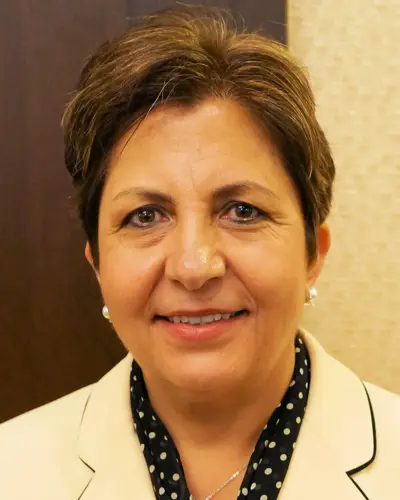
Wafa Sultan is a Syrian-American medical doctor, writer, and critic of Islam.
