Khan Abdul Ghaffar Khan Quotes
There is nothing surprising in a Muslim or a Pathan like me subscribing to the creed of nonviolence. It is not a new creed. It was followed fourteen hundred years ago by the Prophet all the time he was in Mecca.
Khan Abdul Ghaffar Khan, 1890–1988, Pashtun Pakistani Non Violent Political Activist, Question to an interviewer
Sourced by: Eigen's Political and Historical Quotations


Muslim clerics throughout the world had been relatively mild in their criticism of Islamic Extremists and Terrorists. Delic was one of those who urged stronger moral statements. Many of the Muslim clerics in the world actually were themselves holders of Wahhabi and other extremist views. However, many also opposed terrorism and felt that there was nothing in Islam that could justify the indiscriminate killing. However, a number of these were intimidated lest an extremist Muslim cleric issue a Fatwa calling for his death for heresy. Most of us did not then, and even today, do no really understand the extent and frequency of these threats in the Muslim world (and even in the West) and the very frequent assassination or serious wounding of those Muslims who publicly criticize the extremist terrorists. Delic had much more courage than most.

This is a particularly noteworthy quotation as Muslims are often accused of intolerance and here is a Muslim who argues that it is the responsibility of religious leaders to present religion in a tolerant manner.


Munir was a strong advocate for civilian control over the military and as exposed many military atrocities and disappearances. He was poisoned on a Garuda Airlines flight to Holland where he was exposing more of the human rights violations of the Indonesian Military.

Most political cartoons offend. The problem for the Yale Press was that if they did not print the cartoons, the violence and intimidation of the most extreme Muslims will have been rewarded as a strategy. If they printed, some people will be injured and killed in the likely rioting. If rioting did not occur spontaneously, it would be whipped up by the extremists. A Hobsen’s choice for publishers the world over that is exactly what the most extreme Muslims have planned.

Muslims had engaged in violent demonstrations to insist on more Sharia law and the curtailment of behavior that the Muslim Mullahs determined to be contrary to Sharia and Islam. In Nigeria Muslim violence and intimidation had at the time already caused one of the Nigerian states to adopt Sharia instead of civil law. Many Muslims continued the violence in order to spread the adoption of Islamic law. In most counties, there were threats of law enforcement crackdowns to curtail the Muslim violence and attacks on Christians and other religions. In Nigeria however, the Christians under Akinola’s leadership made this not so subtle veiled threat to retaliate. It seems to have worked in the short run although the religious tensions remained very high and no one knew whether or not religious violence or even war would break out.

She is a leading American Arab who is a Syrian expatriate.

With the partition of India forming an independent Pakistan, ethnic riots broke out and millions of people were killed. This joint statement was issued to try and quell the violence but it had progressed too far. Jinnah as a political ploy to obtain the partition organized Muslims and threatened violence—see {627153} and {627169}. Things got out of hand with ethnic cleansing being an objective in many localities—see {627146} and {627149}.


Although the Muslim invasion converted many with force and coercion (conversion by the sword) and used rape to produce a generation of youngsters who could be brought up as Muslims, many Hindus preferred the now religion for the above reasons. In addition, for all but the highest cast Brahmins, the cast system made Indians ripe for conversion to a religion that preached equality of all Muslims as a fundamental tenet. Islam was a much more modern and egalitarian religion.


Many of the Taliban leadership attended this Madrassa when young including Mullah Omar, the leader of the Taliban. Haq is often called “Father of the Taliban.”

Essentially, he is advocating a reformation of the Islamic religion, much like that which has taken place in Christianity and Judaism. However, while most Muslims of the world are not extreme fundamentalists, most of the existing clerics (as did their Christian and Jewish counterparts years ago) turn any attempt at reform into blasphemy and sin. Throughout much of the Islamic world, Muslims who argue publicly for reform are at risk for their lives as the existing Muslim clerics generally encourage attacks on reforms or turn a blind eye to efforts to suppress reform.

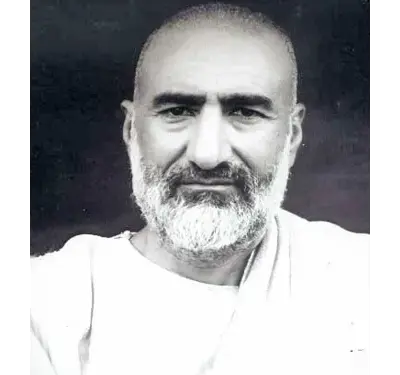
Abdul Ghaffār Khān, also known as Bādshāh Khān (بادشاه خان, 'King Khan') or Bāchā Khān (باچا خان, 'King of Chiefs') and honourably addressed as Fakhr-e-Afghan (فخرِ افغان, 'Pride of Afghans'), was a Pashtun independence activist against British colonial rule in India. He was a political and spiritual leader known for his nonviolent opposition and lifelong pacifism; he was a devout Muslim and an advocate for Hindu−Muslim unity in the Indian subcontinent. Due to his similar ideologies and close friendship with Mahatma Gandhi, Khan was nicknamed Sarhadi Gandhi (Hindi: सरहदी गांधी, lit. 'Frontier Gandhi') by his close associate Amir Chand Bombwal. In 1929, Khan founded the Khudai Khidmatgar, an anti-colonial nonviolent resistance movement. The Khudai Khidmatgar's success and popularity with the Indian people eventually prompted the British to launch a severe crackdown against him and his supporters; the Khudai Khidmatgar suffered some of the most severe repression of the entire Indian independence movement.
