Reza Aslan Quotes
Despite the ways in which it has been interpreted by [Islamic] militants and fundamentalists who refuse to recognize its historical and cultural context, there are few scriptures in the great religions of the world that can match the reverence with which the Quran speaks of other religious traditions
Reza Aslan, Islamic Author, “From Islam, Pluralist Democracies Will Surely Grow,” The Chronicle of Higher Education, March 11, 2005
Sourced by: Eigen's Political and Historical Quotations

This was a remarkable public statement for its time. No other political leader of an Islamic country would dare claim that people have a right to be atheists. Very few would even suggest that people should be free to choose their own religion.


This quotation illustrates that a narrow orthodox view of Islam is not the only one in Arab nations. Khaled is not an obscure cleric, but a popular television personality. While his views are considered heresy by many orthodox Muslims, the narrow view is by no means universal. Orthodox Islamists believe that God has commanded that all mankind be Muslims and the ones who are not are either ignorant so need to be “educated”, or evil and therefore should be killed. However, Muhammad ordained that an exception should be made for “Children of the Book”—Jews and Christians who revere the Old Testament. This was at a time when Christians would not allow any other form of worship but Christianity. Christianity, Judaism and most other religions have become tolerant of other religions and allow open alternative worship. Islam which early on led the way to tolerance, has in many countries gone back to the intolerance that existed amongst many Christians at the time of Muhammad.

While not in the Koran, this attributed statement is the basis for the ban on non-Muslims going on a Hajj and going to the most holy Muslim places—Mecca, Mina, Muzdalifa, and Arafat as well as the anti-religious hostility to all religions but Islam which is present in some Muslim countries.

Ahmad denied saying this although the reporter who wrote the original story insists that he did and she wrote it down at the time. Ahmad did not deny the statement when it first appeared in the Fremont Argus, but only did so several years later.
In one of the historical ironies of the 12th century, a Christian sect preferred the rule of the Muslims than their Christian brethren—on the grounds of religious tolerance. It illustrates the changes that take place over time. By the 21st century, it was the Christians who were thought of as tolerant and the Muslims as the opposite.

Many, if not most, non-Muslim scholars and thinkers very much disagree with Hamid on this point. The great exceptions of Islam are almost 1,000 years in the past. Current Islam, they argue, is not more exceptional than the beliefs of modern Mongolia which dominated most of the known world centuries ago, but has little that deserves special respect in the 21st country beyond the general respect which is owed to all religions and nationalities. With the exception of Turkey, Islamic nations are for the most part, backward, and virtually no other non-Muslim nations try to emulate them in any way.


Half the population of Amsterdam was at the time non Western in origin including many Muslims. Cohen was one of the few major Dutch leaders who worked to make multiculturalism work. However, there were so many religious Muslim extremists already active in the Netherlands, that it was very difficult. The Dutch had elected a Muslim as a member of Parliament and whole many Muslims were very proud of this, the religious extremists were furious. She was a woman, and she did not believe or advocate that Holland adopt Sharia (Islamic) law. She was an Islamic reformer who was opposed to Sharia even in Muslim states. The most successful Islamic nation, Turkey, does not allow Sharia law, and Indonesia, the largest of the Muslim nations also does not follow it.

This is a particularly noteworthy quotation as Muslims are often accused of intolerance and here is a Muslim who argues that it is the responsibility of religious leaders to present religion in a tolerant manner.
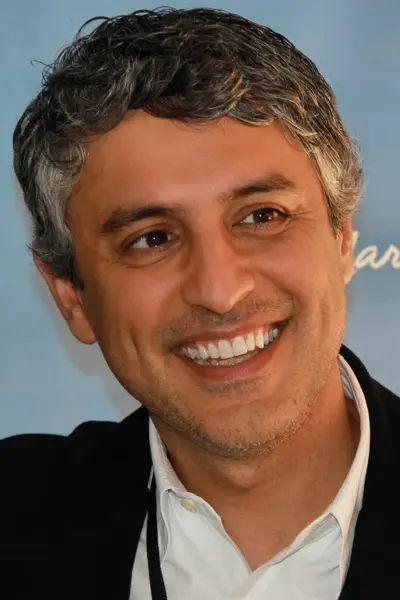
Reza Aslan is an Iranian-American scholar of religious studies, writer, and television host. A convert to evangelical Christianity from Shia Islam as a youth, Aslan eventually reverted to Islam but continued to write about Christianity. He has written four books on religion: No God but God: The Origins, Evolution, and Future of Islam, Beyond Fundamentalism: Confronting Religious Extremism in the Age of Globalization, Zealot: The Life and Times of Jesus of Nazareth and God: A Human History.
