Mohammed Arkoun Quotes
One cannot deal with present day Islam by simply repeating the linear chronological account of its historical spread, the theological-juridical frames of its articulation as a system of beliefs and non-beliefs fixed by God, dedicated to the pious observance of the faithful, and the no less conformist and repetitive transcriptions of the Islamicists which have been adopted by political scientists to describe present-day Islam.
Mohammed Arkoun, 1928–2010, Algerian / French Islamic Scholar & Reformer, “Present-Day Islam Between its Tradition and Globalisation”, Farhad Daftary (ed.) Intellectual Traditions in Islam, 2000
Sourced by: Eigen's Political and Historical Quotations


The Interior Ministry has “responsibility” for the press in Saudi Arabia. Licenses are needed to publish a newspaper or magazine. The licenses are granted by the Interior Ministry. Editors keep close to Nayef and censor themselves based on his “guidance.” Wahhabism is a violent and fundamentalist version of Islam whose origins lay in Saudi Arabia. Ibn Taimaya was a 14th century Muslim cleric who preached a particularly radical form of Islam.

Note that Khomeini realized that America assisted Saddam Hussein. We ended up being the enemy of both.

Legal Religious Ruling. This is an example of a source of tension between some Muslims and others. Non-Muslims are required to have a Muslim Education in Muslim countries, but they insist that any required Christian or secular education in a non Muslim country is anti-Islamic.

The party to which he was referring was the Ennahda Party of which he was a founder. Note that party's acknowledgement that Islamic extremists had hijacked the terms "Islamic" and "Islamism", thus requiring them to change vocabulary to distinguish themselves and their more democratic values.

She was explaining her antipathy to Muslim Fundamentalists having French citizenship or even sing allowed into the country.


Ironically, while Radical Fundamentalist Muslims abroad claim that Western materialism and dem0cracy is not only anti-Islamic but a danger to Islam, in America there has been a growing and thriving Islamic community which has had far less difficulty reconciling their religion and American democracy and values than have other religions such as the Amish and orthodox Jews. This ease of the transition and Islamic compatibility with modern America is perhaps the central reason for the hatred of America. Aslan argues that the Muslim reformation is succeeding very smoothly in America and is the model for Muslims throughout the world.
This quotation helps to explain the religious revelry in military achievements in Islam.

The notion that Islam would be practiced by individuals was in the Ayatollah’s view insufficient. Islam must also control the government—the head.

His views are a mix of modernism and fundamentalism. He favors democracy and elections but also favored the Taliban destroying the great ancient Buddha statues when he was called an idol worshipper for urging the preservation of art.

Gabriel exaggerates in the sense that while the quotation is correct for many Muslims, it is by no means true of all. Iran for example is an Islamic theocracy, but Turkey is a 99 percent Muslim nation which is totally secular and in some ways is much more restrictive of Islamic teaching and practice than most secular democracies. The fundamentalist Muslim view of the state and religion is essentially the same as the ultra orthodox Jews and Christians. It is true that a greater proportion of Muslims believe in the merging of civil and religious law than Jews and Christians, but by no means all. The non Arab Muslims are much less likely to see the unity of state and religion.

This is another of De Tocqueville’s prescient statements that in retrospect seem so amazing given the time. This quotation could serve as an op ed in a newspaper of any of the industrial democracies of the early 21st century. However, he did not have the information of the details we have today that showed Islam as the pinnacle of scientific, philosophical, literary and medical achievement at the beginning of the second millennium, while the Christian nations of Europe were mired in the Dark Ages. It was the same Koran but a very different interpretation and framework that led to the decadence while it was the Protestant Reformation that triggered a Christianity that was hospitable to modernity and enlightenment.
The prohibition of anything new has been one of the reasons for the decadence of Islam over the years. When originated, it was the most modern religion in the world. However as other religions grew and reformed, Islam has not and resists all new things. Christianity which was in the Dark Ages when Islam began, did change including the Protest Reformation so by the end of the 17th century the Christian world was more advanced scientifically, politically, and economically.

This quotation illustrated the extreme polarization between the current fundamentalist Muslims, and the Muslim modernists and the West. Kamal Ataturk, the great leader and stateman who is the father of modern Turkey, is castigated by the author for leading the new Turkish parliament to depose the Caliph – the civil and religious autocrat, one of whom reigned from after the death of Muhammad till his abolishment in 1924. Most of the rest of the world credits Ataturk with being one of the great leaders of all time—one who led a democratic revolution which transformed Turkey into the only Muslim secular democracy, requiring pubic secular European type education for all children, giving women the right to vote (before the U. S. even), adopting a European alphabet and dress, and outlook on life—creating most remarkably a total cultural revolution with virtually no loss of life. No revolutionary leader, before or since has led so extensive a political and cultural revolution, and it was a bloodless revolution. Turkey, into the 21st century, was by far the most powerful, industrialized, scientific and modern nation of Muslims in the world and others were far behind. Yet many Islamic theologian still castigate Atatork for his great achievements as being against the will of God.
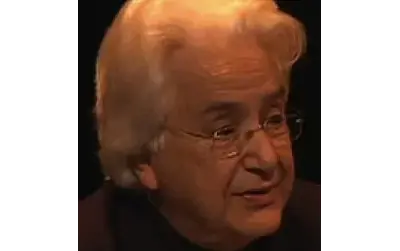
Mohammed Arkoun was an Algerian scholar and thinker. He was considered to have been one of the most influential secular scholars in Islamic studies contributing to contemporary intellectual Islamic reform. In a career of more than 30 years, he had been a critic of the tensions embedded in his field of study, advocating Islamic modernism, secularism, and humanism. During his academic career, he wrote his numerous books mostly in French, and occasionally in English and Arabic. He appeared on numerous occasions on French TV and magazines, on Berbère Télévision speaking in Kabyle, his mother tongue, and on Al Jazeera speaking in Arabic.
