Aisha Hinds Quotes
Once the Fugitive Slave Act took effect, the Northern states were no longer safe for those who managed to escape from being enslaved. The second season of Underground does explore Canada's role in providing a welcoming place for the thousands who were in danger of being captured and returned to their owners, and those who escaped by way of rerouting beyond the American borders.


The Federal Fugitive Slave Act required all in free states to assist owners of escaped slaves to return them to their owners. In 1854 a Missouri slave owner tracked his escaped slave to Wisconsin and the Federal officials incarcerated the slave pending his return. A Wisconsin mob broke the slave out of jail and helped him escape to Canada. Booth was convicted under the Fugitive Slave Act for aiding the escape. Booth’s conviction was overturned by Wisconsin Supreme Court Judge Smith whose opinion overturned the Fugitive Slave Act on the grounds that it had usurped state’s rights. The Supreme Court overturned Smith’s ruling, but Booth was pardoned. See {587928}, {587927} & {587928}. State’s rights is a concept that we generally identify with Southern slave holding states to maintain slavery, but in this case, Wisconsin used the concept to fight slavery.

I should sooner remain in Southern bondage than avail myself of the opportunity of Northern freedom.
Hughes was a strong critic of the exploitation of laborers in the North by what he called the “bloated capitalist” First Irish Bishop in the United States

It is not only in modern times that there were “litmus tests” for appointees. Franklin Pierce had been elected as a Democrat with a coalition that included Southerners who were able to dominate the weak Pierce precluding abolitionists from any appointments.
This quotation sheds light on an embarrassing aspect of corruption in the Union Army during the Civil War. Captain Wilder was as his official title denotes, the officer on his military base in charge of slaves who had escaped and crossed over the Union Lines. Escaped slaves were officially called “Contrabands.” He had over 10,000 in his charge. There had been an official order issued by the General of the Army that prohibited the military from returning slaves to their owners. See {619337}. However, the Southern owners of the escaped slaves would cross the Union lines, go onto the Union military base, identify their former slaves, at Fort Monroe, and bribe Union soldiers to in effect kidnap the former slaves and forcibly return them to their former masters. Then, often using bribery, the masters would smuggle their former slaves back across the lines and return to their plantation where the escapees were physically punished and put back to work. While some Union military commanders would not allow this, others thought the action just and was a good way for the men to pick up some extra money. The photo was taken in the Captain’s district showing the runaway slaves in work details for the army.

This is an important quotation because it shows that slavery was the principle reason that the South succeeded and began their rebellion. In the early 20th century, there was a movement to make the Confederacy and the rebellion more noble by promoting the idea that the Civil War was fought by the South for more lofty reasons such as States Rights, Original Construction, different economic philosophies and the like. This was a more noble cause then the right to deny other human beings their rights, to own other human beings who they could beat, torture, sexually use and even murder them was a pretty selfish and demeaning reason to have started a rebellion that would then cost more Americans their lives than any other American conflict. The succession documents and others of the Southern States and the Confederacy make it clear that slavery was THE issue and fleeting references to any of the others were only made to complain about the potential effect on abolition and the refusal of the abolitionist states to cease aiding and protecting fugitive slaves.

This clause was superseded by the 13th Amendment {621373}. More and more abolitionists were refusing on ethical and moral grounds to return fugitive slaves. Some states actually passed laws forbidding the return of fugitive slaves and freeing them the second they set foot in the state. Some objected arguing that the law must be enforced and the Constitution obeyed. They had a point, so the solution was to change the Constitution which is what was done in 1865.
Parker and other escaped slaves in Christiana fought off slave catchers and killed the slave owner leading them. Charged with treason, he escaped to Canada with his family and lived there the rest of his life. While not a polished writer, after he himself had escaped and went to Christiana and leaned to read and write. He wrote this narrative of his life as a slave—one of the few written works we have from slaves.

Although escaped slaves could not fight for the North, they could be very useful on road building and other military engineering projects needing labor. Every time a slave escaped, it diminished the military engineering labor of the Confederates by one but added to that of the Union. Pinkerton and others however engaged many escaped slaves who volunteered for an incredibly dangerous mission. They returned back to the Southern lines into the slave work gangs, and organized slave escapes of groups of Blacks. In addition, many of them, by observing and overhearing the Confederate soldiers gained information regarding supply and troop levels and movements, and this they brought back to the Union officers. Those that were caught were executed as spies. Escaped slaves were espionage and covert operations agents before they were allowed to be soldiers.
The Federal Fugitive Slave Act required all in free states to assist owners of escaped slaves to return them to their owners. See realted quotations.


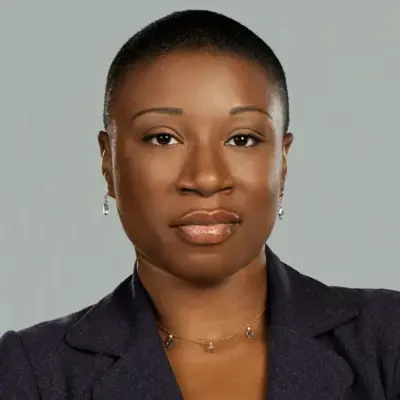
Aisha Jamila Hinds is an American television, stage and film actress. She had supporting roles in a number of television series, include The Shield, True Blood, Detroit 1-8-7 and Under the Dome. In 2016, she played Fannie Lou Hamer in biographical drama film All the Way. She has also appeared in Assault on Precinct 13 (2005) and was cast as Harriet Tubman in WGN America period drama Underground. Hinds currently stars in the Fox procedural drama series 9-1-1.
