William Jennings Bryan Quotes
On the one side stand the corporate interests of the United States, the moneyed interests, aggregated wealth and capital, imperious, arrogant, compassionless.... On the other side an unnumbered throng, those who gave the Democratic party a name and for whom it has assumed to speak.
William Jennings Bryan, 1860-1925, U. S. Secretary of State, U. S. Congressman (Democrat, NB), 3 Time Unsuccessful Democratic Presidential Candidate, Speech against the Sherman Silver Purchase Act
Sourced by: Eigen's Political and Historical Quotations

Webster was taking regular bribes from large corporations and even complained when his payments were late. So he might have had a pro-large business bias. At the time taking bribes even if there was a quid pro quo was not illegal or even “unethical” by then Congressional rules.


This quotation and other material were so radical and inflammatory that Calhoun wrote and published this anonymously.


In his economic view, managers, accountants, attorneys, owners, shareholders, landlords, were all supported by the workers who have to support themselves and all the others.


One important observation of this quotation is the pejorative language Mises used to describe “Union Bosses” as opposed to “Union Leaders.” There were indeed a few Union “Bosses” but most unions had popularly elected leaders. It is similar to the left wing critic who refers to Corporate Executives as “Greedy Monopolists.” A few are but most are not. Historically, in the last half of the 20th century and the beginning of the 21st, the conservatives tended to be much better at pejorative language and used it more frequently and uniformly than the liberals who tended to be better in the last part of the 19th century and the first half of the 20th century.


Salisbury was a brilliant, effective prime minister, but he was a snob and not a democrat. See {639131}.
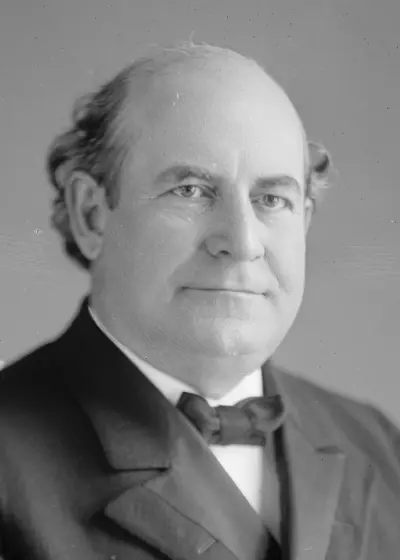
William Jennings Bryan was an American orator and politician from Illinois and Nebraska. Beginning in 1896, he emerged as a dominant force in the Democratic Party, running three times as the party's nominee for President of the United States in the 1896, 1900, and 1908 elections. He also served in the United States House of Representatives and as the United States Secretary of State under Woodrow Wilson. Because of his faith in the wisdom of the common people, he was often called "The Great Commoner".
