Thomas Paine Quotes
Of the present state we may justly say, that no nation under heaven ever struck out in so short a time, and with so much spirit and reputation, into the labyrinth of art and science; and that, not in the acquisition of knowledge only, but in the happy advantages flowing from it. The world does not at this day exhibit a parallel, neither can history produce its equal.
Art did not have the modern meaning in this context. It referred to the “mechanical arts”—what we would call mechanics and engineering today.
Thomas Paine, 1737-1809, British American Political Philosopher, “Useful and Entertaining Hints”, The Pennsylvania Magazine, February 10, 1775
Sourced by: Eigen's Political and Historical Quotations


The societies that had regularly produced the great advances in the sciences were those that allowed its citizens much liberty—liberty of thought, expression, association, etc. Where religious dogma controlled thought and expression, great scientific achievements were far less probable or less productive. Imagine, what Galileo might have achieved if the Church had not curtailed his efforts. When Islamic society was open, the sciences flourished whereas they were stifled in Christian Europe, but once Islam closed and liberty was no more, Islamic science degenerated to its low point of the 21st century.


Many important breakthroughs emanated from scientific curiosity of some scientist who was not thinking of any practical application at all.


Kahn was the leading scientist behind the Pakistan nuclear weapons program. However, he then was personally involved in not only selling nuclear secrets to other counties but to terrorists as well. He personally enriched himself while enabling nuclear proliferation in the world. The article was an expose of his dishonest and illegal activities. The Pakistan government was in a bind. Kahn was a national hero, the only Pakistani who had ever won the Nobel Prize in a Scientific Field. Convicted and then pardoned by the President, but he was put under house arrest and surveillance and banned from any activity involving technical assistance to others. Kahn’s religious bigotry towards Hindus as disclosed by his letter made him even more of an international pariah. See {586385} for other attacks on his critics.


First Muslim to win the Nobel Prize


By “arts” Jefferson meant the mechanical arts—inventions and engineering. Jefferson Extrapolated the science and technology progress at the time to the future in a way that few others did at that time.
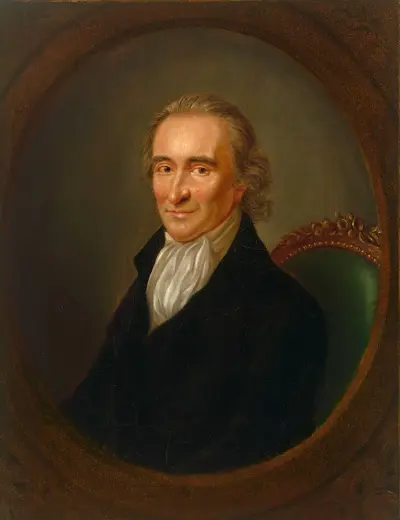
Thomas Paine was an English-born American political activist, philosopher, political theorist, and revolutionary. He authored Common Sense (1776) and The American Crisis (1776–1783), the two most influential pamphlets at the start of the American Revolution, and helped inspire the patriots in 1776 to declare independence from Great Britain. His ideas reflected Enlightenment-era ideals of transnational human rights. Historian Saul K. Padover described him as "a corsetmaker by trade, a journalist by profession, and a propagandist by inclination".
