Gustave Le Bon Quotes
The sudden political revolutions which strike the historian most forcibly are often the least important. The great revolutions are those of manners and thought. The true revolutions, those which transform the destinies of people, are most frequently accomplished so slowly that the historians can hardly point to their beginnings. Scientific revolutions are by far the most important.
Gustave LeBon, 1841-1931, French Physician & Sociologist, Quoted in Seldes, The Great Quotations, Citadel, 1983
Sourced by: Eigen's Political and Historical Quotations


As humans develop, their mental innovations and understanding of justice, fairness, freedom and standard of living in turn drive their political ideology which in turn drives most revolutions as Humboldt postulated. And this is before he had the example of the French and Russian Revolutions much less the revolutions of South America, Asia and the fall of the Soviet Union.


It was only a short time before the public attitude of Americans on homosexual marriage went from hardly anyone approving to a majority of the public approving.

Most scientists do not have the skill or the totality of knowledge to accurately predict the effect of scientific research and learning on society. Many are not interested. Those who try to communicate with politicians and the public are usually met with indifference or suspicion. Above all, the scientific and mathematical literacy of the public is so weak, that it is impossible in much of science to even explain the science to the lay public much less explain its implications. Soddy was a bit of an idealist from a class society and he felt the upper classes should be better informed by scientists.

Lev Davidovich Bronstein. Perhaps it has been just this difference of understanding about revolution, that allowed England and the United States to grow and reform from their revolutions while the Russians, French and many other peoples have destroyed their societies and welfare of their people in the immediate aftermath of their revolutions.


This speech was given in the early days of WWII when it was far from clear that we would win.


Tragically, the world paid a terrible price for the German upheaval before the better world finally emerged.


This characteristic of science causes the politicians great difficulty when allocating public funds for scientific research. It is often very hard to attribute credit to the right scientist when a scientist herself might not yet realize the great significance of her work. Of a number of different scientists each contributing one step of a process when the person who worked on the last link could not possibly have done it without the others along the way. Who to fund and why is terribly frustrating which is why the National Science Foundation and the National Institutes of Health make most of their funding decisions on the basis of proposals and peer review and decision making. None the less, many politicians are constantly trying to interject their preferences, almost always based on their ignorance, especially when they can get research funds into their district.


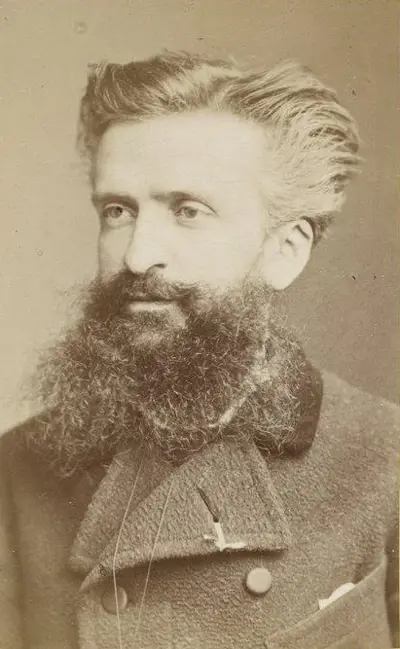
Charles-Marie Gustave Le Bon was a leading French polymath whose areas of interest included anthropology, psychology, sociology, medicine, invention, and physics. He is best known for his 1895 work The Crowd: A Study of the Popular Mind, which is considered one of the seminal works of crowd psychology.
