Howard Rheingold Quotes
Of course, with agriculture came the first big civilizations, the first cities built of mud and brick, the first empires. And it was the administers of these empires who began hiring people to keep track of the wheat and sheep and wine that was owed and the taxes that was owed on them by making marks; marks on clay in that time.
Rheingold, Howard. Tools for Thought: The History and Future of Mind-Expanding Technology. Simon & Schuster, 1985.


Manava Dharma Shastra. Fundraisers, have even in ancient Hindu India, have long been appointed to key government posts. This text is a part of the Hindu Holy Texts. Hindus believe that Manu was a prophet whose text is revealed or inspired.


From a technical and production point of view, there is no practical limit to population size that is imposed by food production. We can produce sufficient food for the world even if population increases dramatically. None the less, even today we have some starvation and much malnutrition problems. These however are political, economic and tend to be distributional. We can produce the food. Morris does NOT advocate large population growth. Although food need not be a problem with an expanding population, job availability, medical care, energy, land, natural resources, ethnic hatred, migration, violence, and other problems are produced by population growth.

Actually, Kerry was incorrect, but he had a point, There are about 110,000 employees of the U. S. Department of Agriculture and every state has their own department of Agriculture with employees. There are about 2 million farms in America. So there is a government agriculture employee for about every 15 farms—a ratio that no other occupation shares.
This was the origin of the term “Green Revolution”


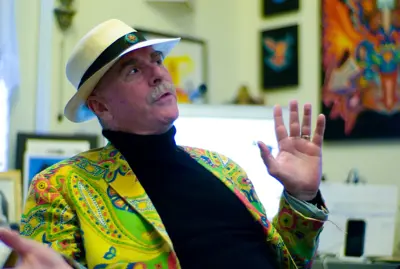
Howard Rheingold (born 1947) is an American critic, writer, and teacher, known for his specialties on the cultural, social and political implications of modern communication media such as the Internet, mobile telephony and virtual communities (a term he is credited with inventing).
