Samuel P. Huntington Quotes
Obviously there are divisions within the West and divisions within Islam - there are different sects, different communities, different countries. So neither one is homogenous at all. But they do have things in common.
Chaudary, Amina R. "An Interview with Samuel P. Huntington." Islamica Magazine, Fall 2006.


This quotation shows Washington's amazing tolerance for the times.


New Lanark was a Utopian commune organized by Owen.


At the time Turkey was the only Muslim majority country where there was coexistence with secularism but with Christians and Jews as well. Ataturk, the great Turkish leader, turned Turkey around, modernized it, Westernized it, and made it a secular state with freedom of Religion, much like the United States. However, Erdogan’s party was constantly trying to make the state more Islamic as his electoral base were the poor, religious, Muslims.

The Ottoman Empire was a word Superpower for over 1,000 years, longer than any other in history, One of its great strengths was its pluralism and ability to not only absorb and assimilate people from other nations, cultures and religions, but also to utilize those people in key positions and contributions to their society. Christians and Jews rose to the highest positions under the Sultans. They became Governor’s of Provinces, manages of departments and even Grand Vizier to the Sultan himself. Jewish and Christian physicians, attorneys, traders were all valued in the Empire even though the had a second class status relative to Muslims. The opportunity was always there to convert to Islam and many did, but many did not and thrived, The Ottomans saw Christian Europe, not only in continuous religious conflict, but individual nations were never able to use the talents of the religious minority, the way that the Ottomans did, and later the United States did. Not only did the Ottomans allow immigrants from all over the world to become part of the Empire Government or Economy, but they actually send agents throughout the empire to find the best and the brightest of young men—regardless of religion or nationality—and bring them to the Sultan’s court for education, training and service. IT should be noted however, that the motivation was in no way moral or a desire for fairness. It was totally pragmatic. Exceptional manpower was not to be wasted.

He was referring to the historical and traditional American political argument of whether the country should be more or less multicultural. There have, even before the founding of the country, this people who favored not only new people from new cultures and nations, but adopting new and foreign ideas. At the same time, there were those who wanted the American culture to not be corrupted of even changed significantly by large number of new people or those new people reaching positions of influence or power. They also often opposed foreign ideas from certain religions to foreign science; from foreign law to foreign philosophy. This interview was just after the Donald Trump Presidential victory.


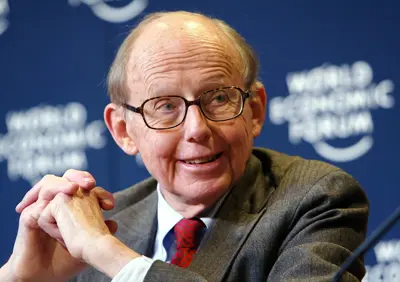
Samuel Phillips Huntington was an American political scientist, adviser and academic. He spent more than half a century at Harvard University, where he was director of Harvard's Center for International Affairs and the Albert J. Weatherhead III University Professor.
