Muhammad Quotes
O people of the Book; Come, let us join together on the "word" (Unity of God), that is common to us all
The people of the Book refers to Jews and Muslims. This passage of the Koran is used to justify ecumenism with Muslims integrated with Jews and Christians. The Koran consists of Muhammed’s sayings, and he himself had opinions about Jews and Christians that differed from time to time. So although this passage signals a tolerant religion, in other places Muhammed preached violence against the people of the Book. At first Muhammed and his followers expected to see the people of the Book adopt Islam as their religion. When they did not, relations deteriorated somewhat.
Muhammed, 571-632, Prophet and Founder of Islam, Koran
Sourced by: Eigen's Political and Historical Quotations


Head of the Sikh Religion. His teaching was that deeds determined the man, not the professed belief and that the existing religions turned man against man.

This statement by The Prophet has been interpreted by Muhammad Abduh and other Islamic modernists and reformers as a call for co-existence and common ground between Muslims on the one hand and Christians and Jews on the other. However, some Muslim extremists interpret this sura to mean that the call is for the Christians and Jews to accept Islam and THEN there will be common words. There is in modern times, there is no Islamic Hierarchy like a Pope to make a definitive determination about such an interpretation so Muslims are split on the interpretation. In that sense Muslims today are like Protestants, Jews and Buddhists.

His protest was focused on Middle East policies which he believed did not value the lives of Muslims as highly as Christians and Jews. The irony of this protest is that United States policy claims to value all life equally as do virtually all industrialized democracies. Omeish however is unusual among world Islamic leaders and politicians in that he values Christian and Jewish life as much as Muslim. Most, typically value Muslims almost exclusively and many advocate the killing of Christians and Jews.


He led an Islamic rebellion against the Quinn Dynasty which ended in his beheading in 1873. Since the Christians were also a minority, he tried to form an alliance with them. Hatred of Christians is not endemic to Islam—politics affect the situation also. His tomb is shown in the graphic.


al-Mansur Abu Ali. Even though the Caliph was trying to return to Muslim Fundamentalism, there was a general tolerance that was far in advance of Christian societies at the time. It is dramatically at variance with many of the more rigorous Islamic countries today.


This quotation illustrates that a narrow orthodox view of Islam is not the only one in Arab nations. Khaled is not an obscure cleric, but a popular television personality. While his views are considered heresy by many orthodox Muslims, the narrow view is by no means universal. Orthodox Islamists believe that God has commanded that all mankind be Muslims and the ones who are not are either ignorant so need to be “educated”, or evil and therefore should be killed. However, Muhammad ordained that an exception should be made for “Children of the Book”—Jews and Christians who revere the Old Testament. This was at a time when Christians would not allow any other form of worship but Christianity. Christianity, Judaism and most other religions have become tolerant of other religions and allow open alternative worship. Islam which early on led the way to tolerance, has in many countries gone back to the intolerance that existed amongst many Christians at the time of Muhammad.


Watchtower Bible and Tract Society of New York

The Roman Empire of 70 million people contained at the time 7 million Jews—the vast majority of the world’s Jews.
While not in the Koran, this attributed statement is the basis for the ban on non-Muslims going on a Hajj and going to the most holy Muslim places—Mecca, Mina, Muzdalifa, and Arafat as well as the anti-religious hostility to all religions but Islam which is present in some Muslim countries.
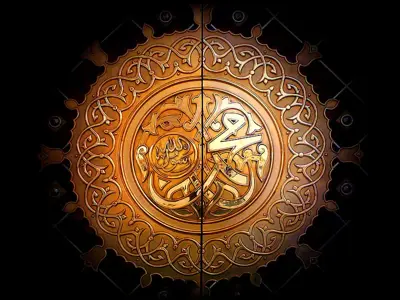
Muhammad was an Arab religious, social, and political leader and the founder of Islam. According to Islamic doctrine, he was a prophet, sent to preach and confirm the monotheistic teachings of Adam, Abraham, Moses, Jesus, and other prophets. He is believed to be the final prophet of God in all the main branches of Islam, though some modern denominations diverge from this belief. Muhammad united Arabia into a single Muslim polity, with the Quran as well as his teachings and practices forming the basis of Islamic religious belief.
