Ida Tarbell Quotes
Now, it takes time to secure and to keep that which the public has decided it is not for the general good that you have. It takes time and caution to perfect anything which must be concealed. It takes time to crush men who are pursuing legitimate trade. But one of Mr. Rockefeller’s most impressive characteristics is patience. There never was a more patient man, or one who could dare more while he waited.
Ida Tarbell, 1857-1944, Journalist & Deputy Secretary of State (Democrat), Description of Standard Oil Company and John D. Rockefeller, July 1903
Sourced by: Eigen's Political and Historical Quotations

She was referring to the high percentage of Rockefeller workers who were killed in industrial accidents with little or no management concern for workplace safety. In addition, she accused Rockefeller (and other very rich employers) of paying such low wages that full time workers lived in abject poverty and suffering the short lifespan that went with poverty then (and even today, but less so.)


If there would be free competition in banking as opposed to monopolies in each area, This is the first major history of banks written in the United States. At the time, there was hardly any competition amongst banks. Each bank had a do facto or official monopoly in its area. In many communities of America, this is still true, but competition in banking has reached almost all high density areas of the country.


One of the contradictions of capitalism is that at many points in history capitalism has caused and/or contributed to great death and suffering. However, that same capitalism has led to the development of science, technology, agronomy, medicine and education which has saved and preserved millions of lives and raised the standard of living more than anything else.


Even though Roosevelt was the most popular President since George Washington, he had his critics. Taking office in 1900 after the assassination of President McKinley, he was often compared stylistically.

The President had decided to aggressively push for railroad regulation to end the rate rebate abuses that were used to support the monopolies like Standard Oil. In vintage Roosevelt tactics, he gave his first major speech on the subject in the setting and forum that would be most opposed to it. The Union League Club of Philadelphia in included the wealthiest men in the area where were most opposed to any Federal Regulation of anything. All the major railroad executives and stock owners and traders were also members. The President wanted to persuade the opponents to change their positions, and sometimes he did. He also was driven by his concept of sports and athletics so that the “opposition” should have “fair notice” for the contest ahead.


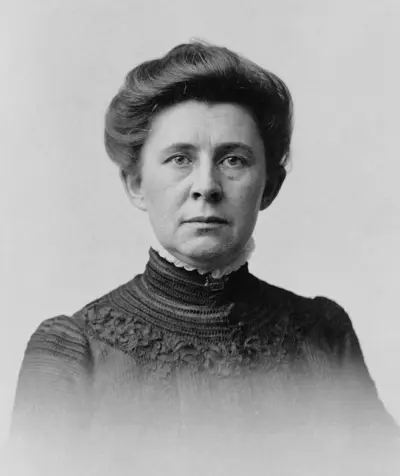
Ida Minerva Tarbell was an American writer, investigative journalist, biographer and lecturer. She was one of the leading muckrakers of the Progressive Era of the late 19th and early 20th centuries and pioneered investigative journalism. Born in Pennsylvania at the onset of the oil boom, Tarbell is best known for her 1904 book The History of the Standard Oil Company. The book was published as a series of articles in McClure's Magazine from 1902 to 1904. It has been called a "masterpiece of investigative journalism", by historian J. North Conway, as well as "the single most influential book on business ever published in the United States" by historian Daniel Yergin. The work would contribute to the dissolution of the Standard Oil monopoly and helped usher in the Hepburn Act of 1906, the Mann-Elkins Act, the creation of the Federal Trade Commission (FTC) and the Clayton Antitrust Act.
