John W. Davis Quotes
Nor does it contribute to national influence or prestige or safety that the process of ratifying or rejecting treaties should degenerate into an effort to discover some qualifying formula acceptable to a minority. There is grave danger in forgetting that, whether in matters domestic or foreign, the business of government is to govern.
John W. Davis, 1873–1955, U. S. Congressman (Democrat, WV), Solicitor General of the United States, US Ambassador to Britain, Democratic Party Nominee for President of the United States, President, American Bar Association, Address to the Association, Quoted in George W. Wickersham, “The Senate and Our Foreign Relations”, Foreign Affairs, December 1923
Sourced by: Eigen's Political and Historical Quotations


Lodge was particularly concerned that under the proposed treaty the United States would be obligated to support the League of Nations military efforts regardless of American public opinion or Congressional action.

The notion of Executive Privilege developed over the years. Our first President thought nothing of giving the Senate access to all the papers and records regarding the negotiations of the treaty with Great Britain.


Stanley was angered because Leopold had revoked what he thought had been a promise.


The Speaker of each house was a very powerful position. However the term of office was a single day, with new speakers being elected for each day of the debate. With the exception of a particularly unpopular legislator, all shared in the speakership at one time or another. When whites first came to America, the Iroquois, were the most sophisticated Native Americans. They were actually a confederation of 5 different tribes each of which was composed if many clans. Although fierce warriors, they had agreed not to fight each other and to assist if any were attacked. They developed a strong agricultural base, to go with the fishing and hunting, and their confederation were very aggressive and sophisticated traders taking them far from their upstate New York “capitol.” Their governmental structure was quite sophisticated with an elaborate, formal, system of checks and balances, multi-cameral legislatures that recognized numbers of citizens, power and wealth, and even cultural traditions. They were literate, capitalistic and globalistic in that they wanted to trade with all. They had written laws, and women had a role that was unique in world history in that only women owned property in a matrilineal society. Further, it was only the Clan Mothers who voted for the 50 Sachems (~Senators)—but their selections had to be accepted by the people they represented. Ironically the descendants of the Iroquois who remained in New York became a very successful Native American group. In the 2000 census, the average Indian in New York State earned the same income as the average White with no Indian gambling money.

The highest court in New York.


At the time, the Tea Party wing of the Republican Party had refused to compromise on anything and many saw as their primary objective was to make sure that the Democratic President was not successful with any of his legislative program. There was gridlock and divided government had become paralyzed government. Buffet and most other Americans were fed up with the gridlock and wanted Congress to start compromising and solving problems.


Indian treaties had legal problems from the beginning of the nation. An agreement had been made at Fort Harmar with 6 Indian nations. One man signed for the United States and several of the sachems, for the Indians. President Washington reported this to the Senate and there was much confusion as to how to proceed. Typically, agents for nations negotiated a treaty but it would not be binding until each ratified it. To the Indians this was not a familiar practice. In this case, the treaty was approved for ratification by the Senate, but what kind of ratification was to be required of the Indians? The Iroquois Indian tribes had formal, methods of reaching consensus, but other nations did not. Whites sometimes reneged on later treaties on the grounds that they were not ratified by the Indian nations. In others, the Indians themselves made the same claim and challenged the right of the Indian treaty signers to speak for the tribe or nation. The problem has never been resolved.


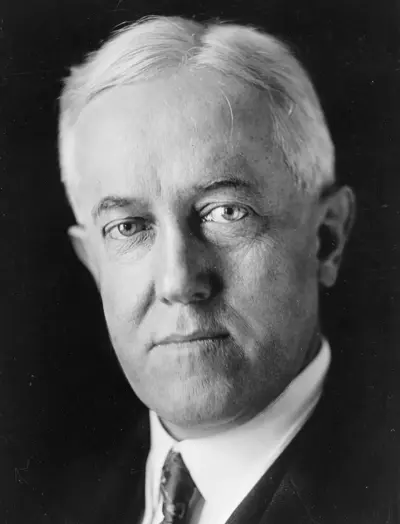
John William Davis was an American politician, diplomat and lawyer. He served under President Woodrow Wilson as the Solicitor General of the United States and the United States Ambassador to the United Kingdom. He was the Democratic nominee for president in 1924 but lost to Republican incumbent Calvin Coolidge.
