Ohio Quotes
No Senator or Representative shall, during the time for which he shall have been elected, be appointed to any civil office under this State, which shall have been created, or the emoluments of which shall have been increased, during such time.
This quotation illustrates a problem that had to be dealt with that we hardly think of today. Namely, can a senator or a member of the House of Representatives also hold a state or local office at the same time. Could a man be Governor and Senator? A local mayor and a Congressman? In some states this was possible but most like Ohio ruled it out.
Ohio Constitution, November 29, 1802, Article I, Section 20
Sourced by: Eigen's Political and Historical Quotations


This appears to be the first publication with the expression of “an axe to grind”.


Note the egalitarian and democratic nature of the method of selection of military officers. This was typical of frontier thinking—the men who were putting their lives on the line should have a say in who their leaders would be. The Governor and the legislature could only select the top officers like the Adjutant General or the Major General. Congress had retained the power to appoint general officers but allowed them and the civilian secretaries of the armed services to select all other officers. The latter enabled wealthy people to be appointed officers without any necessary competence and many even in the Civil War in effect bought their appointments by paying for the uniforms or bringing weapons. While America became more democratic and egalitarian over its first two centuries, the appointment of military officers is the one area where it became less democratic and egalitarian. The election of officers so popular in many states was gradually and finally abolished.

Note that early constitutional experts assumed that one of the President’s roles was to be non partisan and control partisanship. Note the phrase ‘prevent the artifices of party’. The early founders were very wary of political parties of ‘factions’ as Madison called them. However, most were extremely partisan although in the Presidency partisanship was toned down by George Washington but after him, partisan ship became the norm.


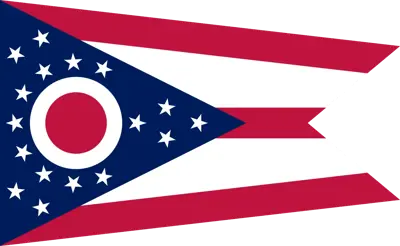
Ohio /oʊˈhaɪoʊ/ (listen) is a state in the Midwestern region of the United States. Of the fifty states, it is the 34th-largest by area, and with a population of nearly 11.7 million, is the seventh-most populous and tenth-most densely populated. The state's capital and largest city is Columbus, with the Columbus metro area, Greater Cincinnati, and Greater Cleveland being the largest metropolitan areas. Ohio is bordered by Lake Erie to the north, Pennsylvania to the east, West Virginia to the southeast, Kentucky to the southwest, Indiana to the west, and Michigan to the northwest. Ohio is historically known as the "Buckeye State" after its Ohio buckeye trees, and Ohioans are also known as "Buckeyes".
