Ohio Quotes
Captains and subalterns in the militia shall be elected by those person in their respective company districts subject to military duty. Majors shall be elected by the captains and subalterns of the battalion. Colonels shall be elected by the majors, captains and subalterns of the regiment. Brigadier-generals shall be elected by the commissioned officers of their respective brigades.
Note the egalitarian and democratic nature of the method of selection of military officers. This was typical of frontier thinking—the men who were putting their lives on the line should have a say in who their leaders would be. The Governor and the legislature could only select the top officers like the Adjutant General or the Major General. Congress had retained the power to appoint general officers but allowed them and the civilian secretaries of the armed services to select all other officers. The latter enabled wealthy people to be appointed officers without any necessary competence and many even in the Civil War in effect bought their appointments by paying for the uniforms or bringing weapons. While America became more democratic and egalitarian over its first two centuries, the appointment of military officers is the one area where it became less democratic and egalitarian. The election of officers so popular in many states was gradually and finally abolished.
Ohio Constitution, November 29, 1802, Article V, Sections 1-4
Sourced by: Eigen's Political and Historical Quotations


The governors of the states were in command of their militias in early America. They could appoint all the ranks up to Colonel, but only the Congress could appoint generals.


Stevens was totally burned out and quit. His predecessor had also been burned out at the enormous scope of the task. TR had gone to Panama himself to boost morale—the first time a President had ever left the United States. He wanted a manager who would stick with the job. An army engineer, Colonel George Washington Goethals was appointed and he became a general when he finished the long incredible job. The famous graphic was when the President mounted and took the controls of one of the huge steam shovels on the canal.

He lost the vote on this issue, and the Congress created the first committee to investigate and oversee military affairs.


He was objecting to the current crop of senior military officer who have little experience in fighting and much in academic, strategic and technical training. Many however see him as a dinosaur who does not realized the complex nature of the modern military missions. In general, we have won almost all of our fighting battles but often failed in our maintaining civil society, occupation, nation building, military procurement, preventing sexual assault of our own troops by our own soldiers, assuring mental health of our soldiers. Hackworth, detractors argue, wants to change what already works and ignore what does not.

Socioeconomic class was a major factor in the Continental Army just as it was in the British Army. New York, unlike New England, did not have the clear-cut majority in favor of independence. Most of the working class at this stage had no opinion on independence as they did not need to and were not of the social class that had been discussing and arguing about the relationship with England. The upper class had been discussing the issue for some time and were polarized into Patriot and Loyalist sympathies. When the Patriots of New York voted to raise its first Regiment, the first people to volunteer were the men of the upper class who had been debating the question for some time. Because of their social class, they had to be officers. The lower classes got into the intellectual and political debate later, and they too were divided. The Patriots among them then volunteered to provide the privates and other enlisted men to the NY regiment. But the early contingents of New Yorkers were very top heavy with officers. While not as rigid as the Continental Army, the modern American Armed Services are still affected by this tradition. While there are many exceptions, there is still a strong correlation between military rank and socioeconomic family status.

1st Baron Verulam. While most agree with the importance of this principle, it is easy to say and very hard to do. Appointing or electing leaders for wartime situations has always been difficult as it involves predicting how people will behave in the future. In WWII for example, many American and German Generals were fired. Adolf Hitler was the classic example of a very popular politician and demagogue who did not have a steady hand but whose maniacal lurches actually weakened the German military effort despite the morale contribution his popularity made.

The President told McNamara that if the administration does not send the troops the Generals want, they will be blamed for any military failures that occur. If they do send all the troops that the Joint Chiefs wanted, they would be going far beyond the limits that the Defense Secretary recommended and the President would have preferred. JBJ felt he really had no political choice. He authorized the wanted troops further escalating the war. See his special assistant’s question about that decision in {617151}.

We are so accustomed to thinking about George Washington as a great military leader that it is surprising to see contemporary comparisons where Washington was found wanting or second. Actually Horatio Gates was a brilliant tactical general and a great leader of men—many think far better than Washington, but the genius of Washington was his strategic and political grasp of the situation. Essentially, with exceptions like the Battle of Trenton, Washington lost almost all the battles he fought as a tactical general. He realized early on that he did not have to win battles; he just had to prevent losing them so badly that he could not continue the fight. The insurgent wins as long as he can still fight. The British could not win unless they eliminated the ability of the revolutionists to fight. But Washington won the last battle at Yorktown, and that is the one that counted. Rush ran the hospitals for the Revolutionary Army and talked to many officers and enlisted men, and also observed much of the British military practices.
Rush ran the hospitals for the Revolutionary Army and talked to many officers and enlisted men, and also observed much of the British military practices. These suggestions were discussed but never passed as regulations. They are fascinating insights into the problems of the general officers of the time who were generally selected for their socioeconomic status rather than other qualifications. Note the drunkenness limitation for a commanding general was proposed to be limited to only 1 allowed bout of drunkenness every 24 hours. It was, he thought, totally unrealistic to require generals to be always sober when on duty. With the mediocre quality of senior officers, Washington had to depend on foreigners like Lafayette, Von Steuben and others. And Generals who were leading attacks out in front of their men like Benedict Arnold immediately became heroes and one of the reasons he ended up as a traitor was that he thought that he was badly treated relative to the “society” Generals who would not accept him and denigrated his exploits when they themselves had never been close to a battle front.


The Founding Fathers wanted to be sure that the American Culture would not be a military one. But with each American war, there was a little more of it as many men identified themselves not by their occupation or current organizational title but by their highest military title. Hawthorne and many other Americans were reluctant to see this occur. However, Hawthorne turned out to be right about the behavior of the Civil War officers long after the war had ended. In Kentucky, the governor was given the right to appoint anyone a Colonel in the state militia, and to this day Kentucky Colonels proliferate. The American military to boost the prestige of retiring officers developed the practice of promoting each officer to the next higher rank the day he retired. So Captains could be Majors, and Majors could thereafter be Colonels, and Colonels, Generals

MacArthur had been the Commander of our Military Forces in Korea. He had a huge ego, and he wanted to cross the border and attack China since Chinese Troops were aiding the North Vietnamese. He had previously assured the Joint Chiefs of Staff and the President that the Chinese would not send troops into Korea, but he was then wrong. And when they had attacked, they had erased the territorial gains that MacArthur had previously gained. The Joint Chief’s of Staff, the Secretary of Defense and the Secretary of State had decided upon a strategy which this time did not follow MacArthur’s strategic advice. The President approved the strategy, but MacArthur spoke and acted contrary. The President met with MacArthur and reiterated the strategy that the President approved. But MacArthur did not follow the orders of the Joint Chiefs. At the time, he and Eisenhower were America’s two most famous military leaders, and of the two MacArthur was senior and thought that he should be President. After he was fired, MacArthur addressed a Joint Session of Congress and gave his "Old Soldiers Never Die" speech which was his first active step towards the Presidency. It was a very sentimental speech with little content and nothing about why he had disobeyed orders. He was totally shocked when it was Eisenhower who was selected to run for President and not him.
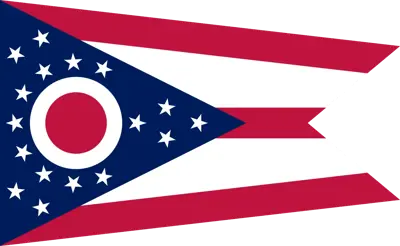
Ohio /oʊˈhaɪoʊ/ (listen) is a state in the Midwestern region of the United States. Of the fifty states, it is the 34th-largest by area, and with a population of nearly 11.7 million, is the seventh-most populous and tenth-most densely populated. The state's capital and largest city is Columbus, with the Columbus metro area, Greater Cincinnati, and Greater Cleveland being the largest metropolitan areas. Ohio is bordered by Lake Erie to the north, Pennsylvania to the east, West Virginia to the southeast, Kentucky to the southwest, Indiana to the west, and Michigan to the northwest. Ohio is historically known as the "Buckeye State" after its Ohio buckeye trees, and Ohioans are also known as "Buckeyes".
