Elihu Root Quotes
No nation now sets forth to despoil another upon the avowed ground that it desires the spoils.
Root, Elihu. "Towards Making Peace Permanent." Nobel Lectures, Peace 1901-1925, edited by Frederick W. Haberman, Elsevier, 1972.


Hobson, like Mark Twain in America, was a major critic of imperialism.


When the British first colonized South Africa, the area they used was not inhabited or very sparcely so. However, some Black tribes (including the Zulus) were moving from the north and themselves were colonizing or annexing the sparcely populated areas to their kingdom. The British were most interested in Trading so did not have large land asperations. The Dutch white Boer Africanners, in contrast, wanted to farm the lands and use the range for their cattle. They wanted the land. The English policy was that there would be friendly relations with the Black tribes surrounding their Cape Colony and no one should take their land. However the Boers started attacking the Black areas and seizing their farms and villages. At first, the English assumed that the Blacks would easily be able to ward off the invasion as the Afrikanners had no professional troops like the British. However, the neighboring native tribes were not very warlike or good fighters. They were being overrun by the Zulus coming from the North and the Boers from the South. The British Government had a real problem in that they would have to have British soldiers fight the white Afrikanners if they wanted to stop the illegal white invasions. This was the root of the Boer War where the British would be fully at war with the Africanners.

Referring to the proposal to Annex Hawaii in 1887:

There had been an era whereby the French military had conquered much of Africa without the approval of the civilian authorities.

Gallatin, then an Ambassador, was opposed to administration designs on Florida. In a response Monroe told him that Florida was going to be taken anyway, but in reality it had already been done so.


The word, “filibusters” is a noun referring to irregular mercenaries. The term took on a more specific meaning in Parker’s day. The Merriam Webster Dictionary defines the term as “Americans engaged in stirring up rebellions in Latin America in the mid-19th century.” This is the meaning in the Parker quotation.

Clinton was a founder of the society.

He conquered Korea in an act of blatant aggression, but got bogged down in a complicated occupation. He died before the Chinese part of the plan could be carried out. However, ever since China, Korea and other Asian countries have distrusted Japan and her aggressive intentions and history. The horrible Japanese record of aggression and atrocities of WWII solidified that anti-Japanese sentiment which still exists to some extent.


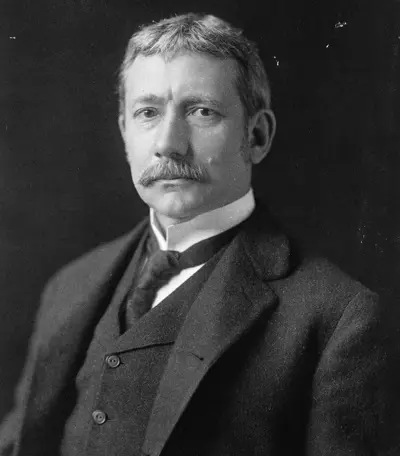
Elihu Root was an American lawyer and statesman who served as Secretary of State under President Theodore Roosevelt and as Secretary of War under Roosevelt and President William McKinley. He moved frequently between high-level appointed government positions in Washington, D.C. and private-sector legal practice in New York City. For that reason, he is sometimes considered to be the prototype of the 20th century political "wise man", advising presidents on a range of foreign and domestic issues. He was elected by the state legislature as a U.S. Senator from New York and served one term, 1909–1915. Root was awarded the Nobel Peace Prize in 1912.
