Theodore Parker Quotes
Where the carcass of a nation rots there will be the filibusters be gathered together. Every raven in the hungry flock of American politicians looks that way, wipes his greedy beak, prunes his wings, and screams “Manifest Destiny.”
The word, “filibusters” is a noun referring to irregular mercenaries. The term took on a more specific meaning in Parker’s day. The Merriam Webster Dictionary defines the term as “Americans engaged in stirring up rebellions in Latin America in the mid-19th century.” This is the meaning in the Parker quotation.
Theodore Parker, 1810-1860, American Clergyman & Abolitionist, Speech, The Nebraska Question, 1854
Sourced by: Eigen's Political and Historical Quotations

America had declared war on Mexico and President Polk had designs on California and other territory.


At the time, many of the European powers were seizing African and Asian colonies.

Referring to the proposal to Annex Hawaii in 1887:

There had been an era whereby the French military had conquered much of Africa without the approval of the civilian authorities.


Buchanan was then Secretary of State.

He conquered Korea in an act of blatant aggression, but got bogged down in a complicated occupation. He died before the Chinese part of the plan could be carried out. However, ever since China, Korea and other Asian countries have distrusted Japan and her aggressive intentions and history. The horrible Japanese record of aggression and atrocities of WWII solidified that anti Japanese sentiment which still exists to some extent.


Clinton was a founder of the society.


This was not the ravings of a right wing extremist. It was normative for Prussia as a whole. Right wing extremism as we think of it today was the norm of the ruling classes in Prussia and other parts of Germany. This book was a best seller in Germany. This quotation illustrates the mentality of the conservative, militarist, culture that dominated Germany at the time. The German aggression of WWI was not even considered as immoral but a God-given right.


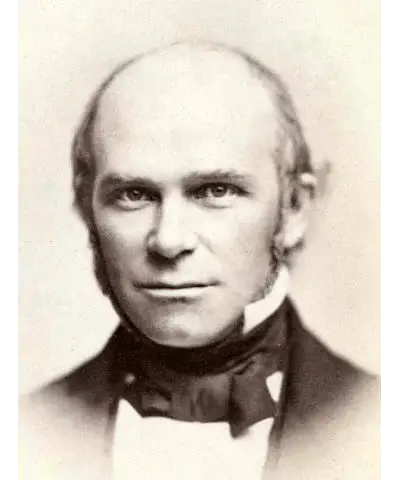
Theodore Parker was an American transcendentalist and reforming minister of the Unitarian church. A reformer and abolitionist, his words and popular quotations would later inspire speeches by Abraham Lincoln and Martin Luther King Jr.
