Pearl S. Buck Quotes
No longer can we afford to stuff the brains of the young with facts. The time is too short, the necessity for results too pressing. The new education must be based on the elimination of facts except as they illustrate principles. How to use facts, not how to accumulate them, is the purpose of true education.
Buck, Pearl S. Of Men and Women. John Day Company, 1941, p. 74.

This quotation illustrates one side of a major issue in modern education. Wilkins emphasizes the importance of the specific content taught while others argue that there is great dissention in the nation on exactly what should be taught and national agreement is impossible and we cannot predict the future to determine what content will necessarily be needed. However, they argue that it is the critical thinking skill and technique and that is most important irrespective of content.


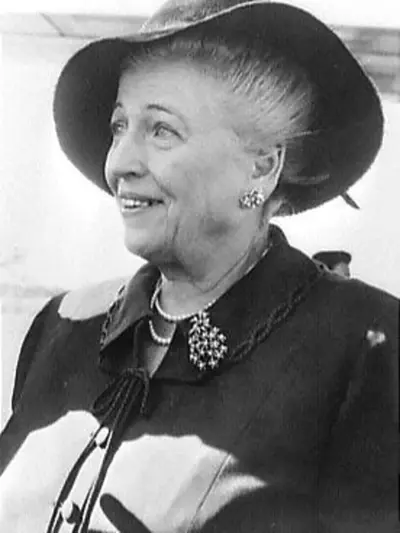
Pearl Sydenstricker Buck also known by her Chinese name Sai Zhenzhu (Chinese: 赛珍珠) was an American writer and novelist. As the daughter of missionaries, Buck spent most of her life before 1934 in Zhenjiang, China. Her novel The Good Earth was the best-selling fiction book in the United States in 1931 and 1932 and won the Pulitzer Prize in 1932. In 1938, she was awarded the Nobel Prize in Literature "for her rich and truly epic descriptions of peasant life in China and for her biographical masterpieces". She was the first American woman to win the Nobel Prize in Literature.
