VITRUVIUS
(Marcus Vitruvius Pollio)
This quotation is often misunderstood. At the time there were a number of siege machines that were used to batter or breach the walls of towns, forts or castles. However, really good architects (actually military engineers and architects were the same at the time) were able to design countermeasures to thwart the machines by analyzing the principles of the siege machines and creating counter machines, structures and tactics. This point was that the clever architects were necessary and able to save nations. Most of these have got unheralded at the time or in history except for a few like Leonardo Da Vinci who is today known as a great artist and futurist but was mainly known his his own time as a military engineer.
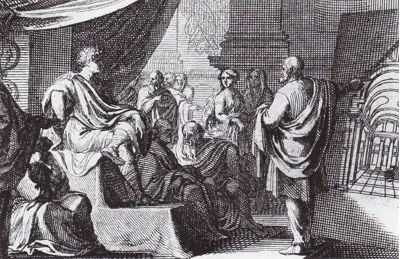
Marcus Vitruvius Pollio (/vɪˈtruːviəs ˈpɒlioʊ/; c. 80–70 BC – after c. 15 BC), commonly known as Vitruvius, was a Roman author, architect, and civil and military engineer during the 1st century BC, known for his multi-volume work entitled De architectura. He originated the idea that all buildings should have three attributes: firmitas, utilitas, and venustas ("strength", "utility", and "beauty"). These principles were later widely adopted in Roman architecture. His discussion of perfect proportion in architecture and the human body led to the famous Renaissance drawing of the Vitruvian Man by Leonardo da Vinci.
