Orestes Augustus Brownson Quotes
No Catholic is or can be a Red Republican or Socialist.
Orestes Augustus Brownson, 1803-1876, Clergyman & Writer, Founder, Workingmen's Party, “The Two Worlds, Catholic and Gentile,” Brownson’s Quarterly Review, April 1852
Sourced by: Eigen's Political and Historical Quotations

While this was his opinion, it was never issued in a Papal Bull or had the force of Catholic law. Meanwhile, almost all of the socialist movements in the West have had Catholics in their leadership and many democrats of modern times would have been considered socialist. Many countries with high proportions of Catholic voters have elected socialist governments in secluding Spain and Italy.


5th Earl of Montrose. The public reaction to a new prayer book issued by the King and created by the King’s religious appointees. Although Protestant in nature, it was created without the early Scottish Protestant tradition of consultation with many levels of clergy and society. It was seen as authoritarian and much like the Catholic mass which was proscribed by Rome. The National Covenant was a document of protest. It was first drafted by Alexander Henderson and Johnston of Wariston, and signed by others, but Montrose was the first signer and the acknowledged leader of the Covenanters.

Most historians agree that by “superstition,” Grant was referring to the Catholic Church, which had been steadily growing will more and more immigrants arriving in America. There was great hostility between Protestants and Catholics at the time.

Smith was the first Roman Catholic to run for President. He was very popular but there was a substantial amount of anti-Catholicism in America at the time. He lost, probably by the margin of the anti-Catholic vote.


Socialism in its then pure form had the state owning and controlling all the major assets of the nation. In this sense it was contradictory to individual freedom and hence democracy. However, in the years after Tocqueville’s quotation and the industrial revolution, socialism has gradually moved away from state ownership and operations of all institutions and resources. Democracy has tended to adopt a more regulatory view to control the excesses of unbridled capitalism. The range of democratic nations by the 21st century encompassed differences but some were described as “social democracies” and had some state ownership but were basically capitalistic economies. Even the self-described Communist nations had become heavily capitalistic albeit with less political freedom. At the same time, even the United States—the epitome of 21st century capitalism, owned and controlled a few of the resources and means of production and tended to regulate the others—a substantial difference from the American democracy which Tocqueville studied.


Many people had come to the conclusion that capitalism as it then existed was not sufficient to correct some of the serious inequities in society. They saw that socialism tended more to focus on those. However, they also saw in socialism per se, as it was than advocated, many other problems. Steffens seems to be the first person to describe that type of person, in this case, himself.
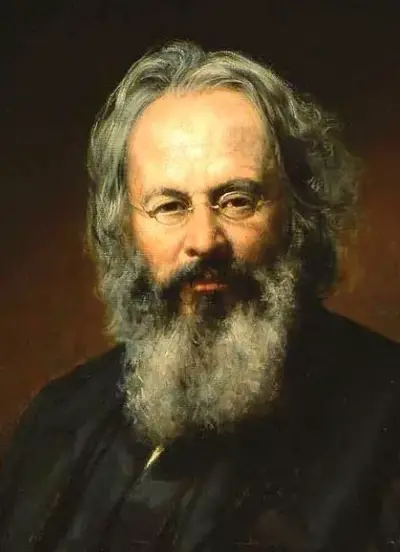
Orestes Augustus Brownson was a New England intellectual and activist, preacher, labor organizer, and noted Catholic convert and writer. Brownson was a publicist, a career which spanned his affiliation with the New England Transcendentalists through his subsequent conversion to Roman Catholicism.
