August Bebel Quotes
We aim in the domain of politics at republicanism; in the domain of economics at socialism; in the domain of what is today called religion, at atheism.
Bebel, August. Speech to the Reichstag, 16 Sept. 1878. Quoted in Cathrein, Victor. Socialism: Its Theoretical Basis and Practical Application. Translated by Victor F. Gettelmann, Benziger Brothers, 1904, p. 215.


Responding to criticisms by Rev. Jerry Falwell about America's moral decline: See also, Mark Russell


This is a critical quotation on the government establishment of religion issue. There are a few people who have argued over the years that the Founding Fathers and their culture was religious and where they were careful to avoid favoring one religion over another, they did NOT intend to put atheism on the same equal plane as religion as far as government action is concerned. However, some of the Founding Fathers were atheists, and some others like John Adams were deists—they believed in a God but not in the Trinity or in Judaism or any organized religion. So this quotation makes it clear that the First Amendment does NOT favor religion over non religion or secularism. Atheism must be on an equal footing but not on a higher plane.


The Red Scare had already reached most conservatives and Truman and most others had not yet been affected by the fear of Communism that so many people had through the 1970s.

Socialism in its then pure form had the state owning and controlling all the major assets of the nation. In this sense it was contradictory to individual freedom and hence democracy. However, in the years after Tocqueville’s quotation and the industrial revolution, socialism has gradually moved away from state ownership and operations of all institutions and resources. Democracy has tended to adopt a more regulatory view to control the excesses of unbridled capitalism. The range of democratic nations by the 21st century encompassed differences but some were described as “social democracies” and had some state ownership but were basically capitalistic economies. Even the self-described Communist nations had become heavily capitalistic albeit with less political freedom. At the same time, even the United States—the epitome of 21st century capitalism, owned and controlled a few of the resources and means of production and tended to regulate the others—a substantial difference from the American democracy which Tocqueville studied.

While this was his opinion, it was never issued in a Papal Bull or had the force of Catholic law. Meanwhile, almost all of the socialist movements in the West have had Catholics in their leadership and many democrats of modern times would have been considered socialist. Many countries with high proportions of Catholic voters have elected socialist governments in secluding Spain and Italy.

Bangladesh had fared very poorly as a part of Pakistan. When it revolted and became independent, it adopted a secular government whereas Pakistan had been, and is, a heavily Islamic state. However, the vast majority of Bengalis were Muslim and some were extreme fundamentalists. Rahman was under constant pressure to make the government more “Islamic” and while he did so somewhat, he tried to advocate for separation of church and state. Bangladesh is not as extreme as Pakistan which is not yet a theocracy but religious forces dominate every aspect of the society.


Vasilii Ivanovich Belavin. head of the church. Because he was responsible for the Russian Orthodox Church in North America he developed the complementary title of ‘Enlightener Of America’

On the surface, this reform seems to contradict Sharia – Islamic religious law -- where religion permeates all of politics.
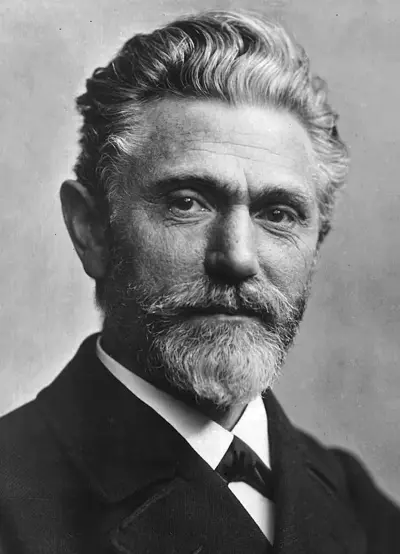
Ferdinand August Bebel (22 February 1840 – 13 August 1913) was a German socialist politician, writer, and orator. He is best remembered as one of the founders of the Social Democratic Workers' Party of Germany (SDAP) in 1869, which in 1875 merged with the General German Workers' Association into the Socialist Workers' Party of Germany (SAPD). During the repression under the terms of the Anti-Socialist Laws, Bebel became the leading figure of the social democratic movement in Germany and from 1892 until his death served as chairman of the Social Democratic Party of Germany.
