Lincoln Steffens Quotes
I certainly am socialistic, but I am not a socialist
Many people had come to the conclusion that capitalism as it then existed was not sufficient to correct some of the serious inequities in society. They saw that socialism tended more to focus on those. However, they also saw in socialism per se, as it was than advocated, many other problems. Steffens seems to be the first person to describe that type of person, in this case, himself.
Lincoln Steffens, 1866-1936, Editor and Journalist, Statement to his sister, 1908
Sourced by: Eigen's Political and Historical Quotations

The Civil Rights Act of 1964 This is a classic example of a twisted logic what was used for many years in the 20th century Red Scare in America. The International Communist Party was critical of the United States legal racial segregation as it was one of the great weaknesses of U. S. Capitalism for most people in the world. The American Communist party also echoed the party line. Almost all socialist organizations supported the Civil Rights Bill as well. Therefore argued Russell and most Southerners, it should be opposed as a Communist effort to weaken America. What they did not mention was that the majority of Democrats and Republicans supported the bill. That the vast majority of all the American churches and other religious organizations supported the bill, that Business groups all across the country wanted legal segregation ended. The only reason there was a long debate is that the Southerners used the filibuster where a small minority could block Senate legislation. But the American majority was so great for civil rights that the filibuster was defeated and the law passed which changed America forever.


Socialism in its then pure form had the state owning and controlling all the major assets of the nation. In this sense it was contradictory to individual freedom and hence democracy. However, in the years after Tocqueville’s quotation and the industrial revolution, socialism has gradually moved away from state ownership and operations of all institutions and resources. Democracy has tended to adopt a more regulatory view to control the excesses of unbridled capitalism. The range of democratic nations by the 21st century encompassed differences but some were described as “social democracies” and had some state ownership but were basically capitalistic economies. Even the self-described Communist nations had become heavily capitalistic albeit with less political freedom. At the same time, even the United States—the epitome of 21st century capitalism, owned and controlled a few of the resources and means of production and tended to regulate the others—a substantial difference from the American democracy which Tocqueville studied.

The king had his first meeting with the new Prime Minister:

She was proposing s radically different pattern of work and economic structure--one of the few really original ideas. All Americans between 18-26 years of age would serve the nation and be assigned to producing and providing the necessities of life for all of society.—Food, Shelter, Health Care etc, See Quotation 644625 for more details,


Alexander Dubcek, Communist leader of Czechoslovakia, had pushed reform so far that 5 Soviet armies invaded. Dubcek was brought to Russia where he tried to persuade the Russian premier that the invasion was contrary to the principles of socialism.

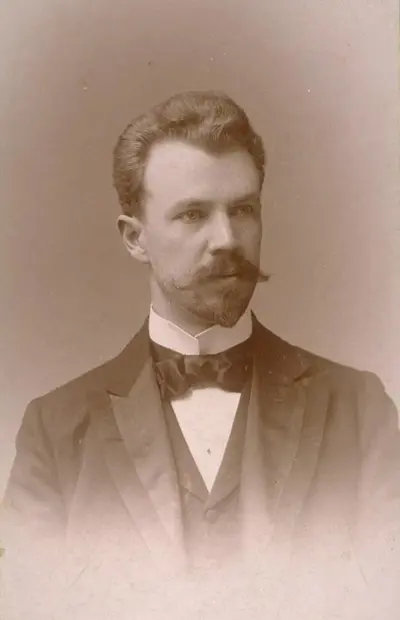
Lincoln Austin Steffens was an American investigative journalist and one of the leading muckrakers of the Progressive Era in the early 20th century. He launched a series of articles in McClure's, called "Tweed Days in St. Louis", that would later be published together in a book titled The Shame of the Cities. He is remembered for investigating corruption in municipal government in American cities and for his leftist values.
