Viktor Orban Quotes
We are not communists.
Orbán, Viktor. Speech to the Hungarian Parliament. 1998, Budapest, Hungary.


3rd Earl Russell of Kingston. He favored and argued for a middle ground of a capitalistic socialism or a socialized capitalism, which is what most democracies became.


Alexander Dubcek, Communist leader of Czechoslovakia, had pushed reform so far that 5 Soviet armies invaded. Dubcek was brought to Russia where he tried to persuade the Russian premier that the invasion was contrary to the principles of socialism.


The Red Scare had already reached most conservatives and Truman and most others had not yet been affected by the fear of Communism that so many people had through the 1970s.

Socialism in its then pure form had the state owning and controlling all the major assets of the nation. In this sense it was contradictory to individual freedom and hence democracy. However, in the years after Tocqueville’s quotation and the industrial revolution, socialism has gradually moved away from state ownership and operations of all institutions and resources. Democracy has tended to adopt a more regulatory view to control the excesses of unbridled capitalism. The range of democratic nations by the 21st century encompassed differences but some were described as “social democracies” and had some state ownership but were basically capitalistic economies. Even the self-described Communist nations had become heavily capitalistic albeit with less political freedom. At the same time, even the United States—the epitome of 21st century capitalism, owned and controlled a few of the resources and means of production and tended to regulate the others—a substantial difference from the American democracy which Tocqueville studied.


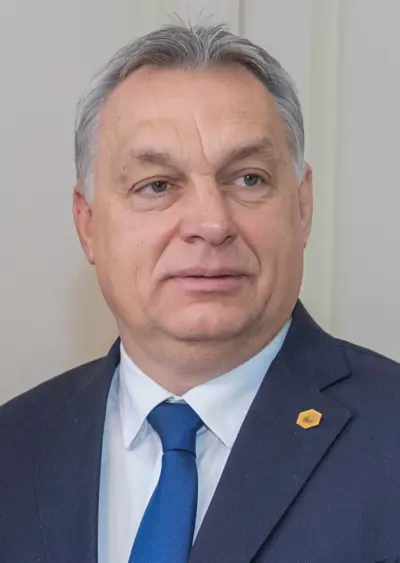
Viktor Mihály Orbán is a Hungarian politician who has been Prime Minister of Hungary since 2010; he was also Prime Minister from 1998 to 2002. He has also been President of Fidesz, a national conservative political party, since 1993, with a brief break between 2000 and 2003. Under his control it became the most centralized, most homogeneous and most disciplined party in Hungarian history. He supervises communications, long-term planning, daily operations, policy direction, and selection of candidates.
