Woodrow Wilson Quotes
My own ideals for the university are those of a genuine democracy and serious scholarship. These two, indeed, seem to go together.
Wilson, Woodrow. The Papers of Woodrow Wilson. Edited by Arthur S. Link, vol. 20, Princeton UP, 1975, p. 320.

In some universities would sometimes protest the selection of a commencement speaker and demonstrate. On some of these occasions the school administration withdrew the invitation. In addition to the problem described by Beckel, the university sells out its basic intellectual commitment to hear all ideas and points of view—regardless of how repugnant or evil. Commencement speakers tend to create a bigger problem because of the custom of the university granting the speaker an Honorary Degree. Whereas it is against the academic tradition to censor a speaker and having a speaker does NOT associate the University, the faculty or the students with the views of the speaker. But the granting of the Honorary Degree does imply an institutional approval and admiration of the speaker, and that is fair game for student protest. However in the beginning of the 21st century some extreme left wing students succeeded in intimidating spineless university administrators and trustees into censoring speech and the ideas of the speaker. This was typical behavior of the right wing brownshirts of the 1930s when it was the Fascists who were prohibiting certain speakers—usually left wingers. 80 years later it was the left wing extremists engaging in this undemocratic behavior.


She was dealing with a serious campus situation where an invited speaker, Chief of Police Kelly of New York City was prevented from giving his p resentation on the controversial “Stop and Frisk” rules by student protesters who opposed the practice. Brown’s tradition of hearing anyone on the campus regardless of point of view had been broken to the distress of most students, faculty and alumni.


A Saskatchewan school, Wawota Parkland, had suspended a student, Kieran King, who argued that alcohol was much more dangerous than marijuana and then advocated a walkout in support of free speech. The school had barred the doors preventing the walkout and called the Royal Canadian Mounted Police to “assess the threat” that King’s position posed to the school and community. King was suspended for 3 days but the school chose the days of his exams and would not allow him to retake them driving his grades from A’s to D’s. There was of course no threat, and actually what King was saying was scientifically correct. King was further motivated because a close relative had been killed by a drunken driver.

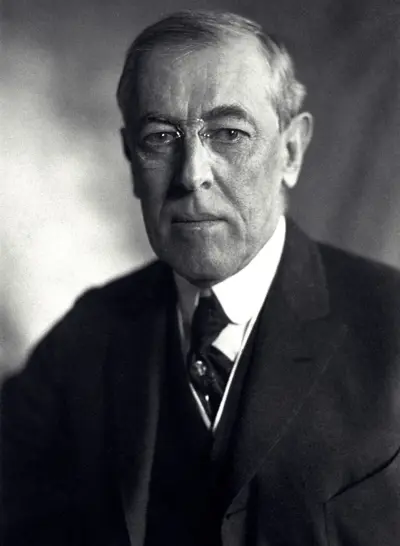
Thomas Woodrow Wilson was an American politician and academic who served as the 28th president of the United States from 1913 to 1921. A member of the Democratic Party, Wilson served as the president of Princeton University and as the 34th governor of New Jersey before winning the 1912 presidential election. As President, Wilson led the United States into World War I in 1917. He was the leading architect of the League of Nations, and his progressive stance on foreign policy came to be known as Wilsonianism. Scholars have generally ranked Wilson in the upper tier of U.S presidents, although he has been criticized for supporting racial segregation and white supremacy.
