James Bryant Conant Quotes
Public education is a great instrument of social change. Through it, if we so desire, we can make our country more nearly a democracy without classes. To do so will require the efforts of us all-teachers, administrators, taxpayers and statesmen. Education is a social process, perhaps the most important process in determining the future of our country; it should command a far larger portion of our national income than it does today.
Conant, James Bryant. Education in a Divided World: The Function of the Public Schools in Our Unique Society. Harvard University Press, 1948, p. 11.


Some find interest in the fact that Adams did not see education as raising the lower classes to be equal to that of the upper class. He chose the word “nearer.”


Quoted in the Court’s notes of the meeting


The Emperor was then only 20 years old and it is doubtful that this was actually written by him personally or even that he was the originator or driver of this policy—probably the strongest statement regarding education of any nation in history. Nonetheless, it is a great quotation on the role of education in the nation. He even ordained that all girls should be educated—an achievement which had not been achieved by the majority of countries 140 years later in 2012. Most incredible about this quotation is that the Emperor made everything else of importance subordinate to the education of children." Meiji the Great

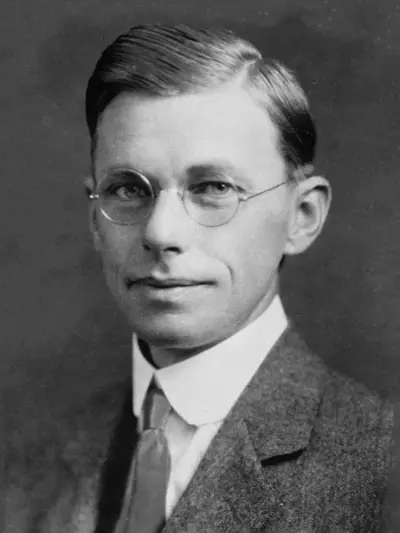
James Bryant Conant was an American chemist, a transformative President of Harvard University, and the first U.S. Ambassador to West Germany. Conant obtained a Ph.D. in Chemistry from Harvard in 1916. During World War I he served in the U.S. Army, working on the development of poison gases, especially Lewisite. He became an assistant professor of chemistry at Harvard in 1919 and the Sheldon Emery Professor of Organic Chemistry in 1929. He researched the physical structures of natural products, particularly chlorophyll, and he was one of the first to explore the sometimes complex relationship between chemical equilibrium and the reaction rate of chemical processes. He studied the biochemistry of oxyhemoglobin providing insight into the disease methemoglobinemia, helped to explain the structure of chlorophyll, and contributed important insights that underlie modern theories of acid-base chemistry.
