Alfred Maurice de Zayas Quotes
Self-censorship as a result of intimidation or social pressures, sometimes referred to as “political correctness”, constitutes a serious obstacle to the proper functioning of democracy. It is important to hear the views of all persons including the “silent majority”, and to give heed to the weaker voices.
Alfred Maurice de Zayas, Writer, historian, & expert in human rights and international law, United Nations Independent Expert on the Promotion of a Democratic and Equitable International Order (also known as Special Rapporteur, President of PEN International Centre, Interim report of the Independent Expert on the promotion of a democratic and equitable international order, .2012
Sourced by: Eigen's Political and Historical Quotations


This was a description of the post WWII censorship in East Germany under the communists, but it applies to most political censorship in any country. The same dynamics functioned in the United States during both World Wars and during the red scare of McCarthyism.


In September of 2005 a Rose’s newspaper published some political cartoons showing the hypocrisy of some Muslims who use Islam to justify murder of innocents and terrorism. Months later, in January of 2006 many in the Middle East protested vehemently and Muslim riots broke out because the Prophet Muhammad's visage was depicted against Islamic tradition. Many Muslim nations started a boycott against Denmark. Many Muslim leaders claimed that insulting religion was an “abuse” of freedom of speech including those from nations which regularly publish material that is virulent against Christians and Jews. Apologies were demanded from Rose.


The President was reacting to a chain of vents whereby Sony Entertainment produced a satiric movie which offended the leadership of North Korea who condemned, threatened and may have launched a cyberattack on Sony. That company reacted by withdrawing the movie and the President thought that was a mistake despite the fact that there were threats against theaters showing the movie and people attending the showings.


Danish fundamentalist Muslim Groups were demonstrating, protesting, and threatening Danes who wrote or published cartoons depicting the Prophet Mohammed. Other Europeans who had committed what Muslims thought to be blasphemy had been attacked and even murdered by Muslim fundamentalists. Led by Nasim Rahnama, some Danish Muslims, braved attack and possible death, and produced a petition of Muslims defending the right of freedom of publication. See {59932} & {59919}.


In September of 2005 a Danish Newspaper published some political cartoons showing the hypocrisy of some Muslims who use Islam to justify murder of innocents and terrorism. Months later, many in the Middle East protested vehemently and Muslim riots broke out and Danish boycotts ensued because the Prophet Muhammad's visage was depicted against Islamic tradition. Many Muslim leaders claimed that insulting religion was an “abuse” of freedom of speech including those from nations which regularly publish material that is virulent against Christians and Jews.

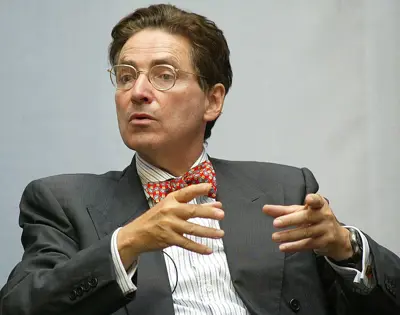
Alfred-Maurice de Zayas is an American lawyer, writer, historian, expert in the field of human rights and international law and retired high-ranking United Nations official. From 1 May 2012 to 30 April 2018 he served as the first UN Independent Expert on the Promotion of a Democratic and Equitable International Order (appointed by the United Nations Human Rights Council).
